Info
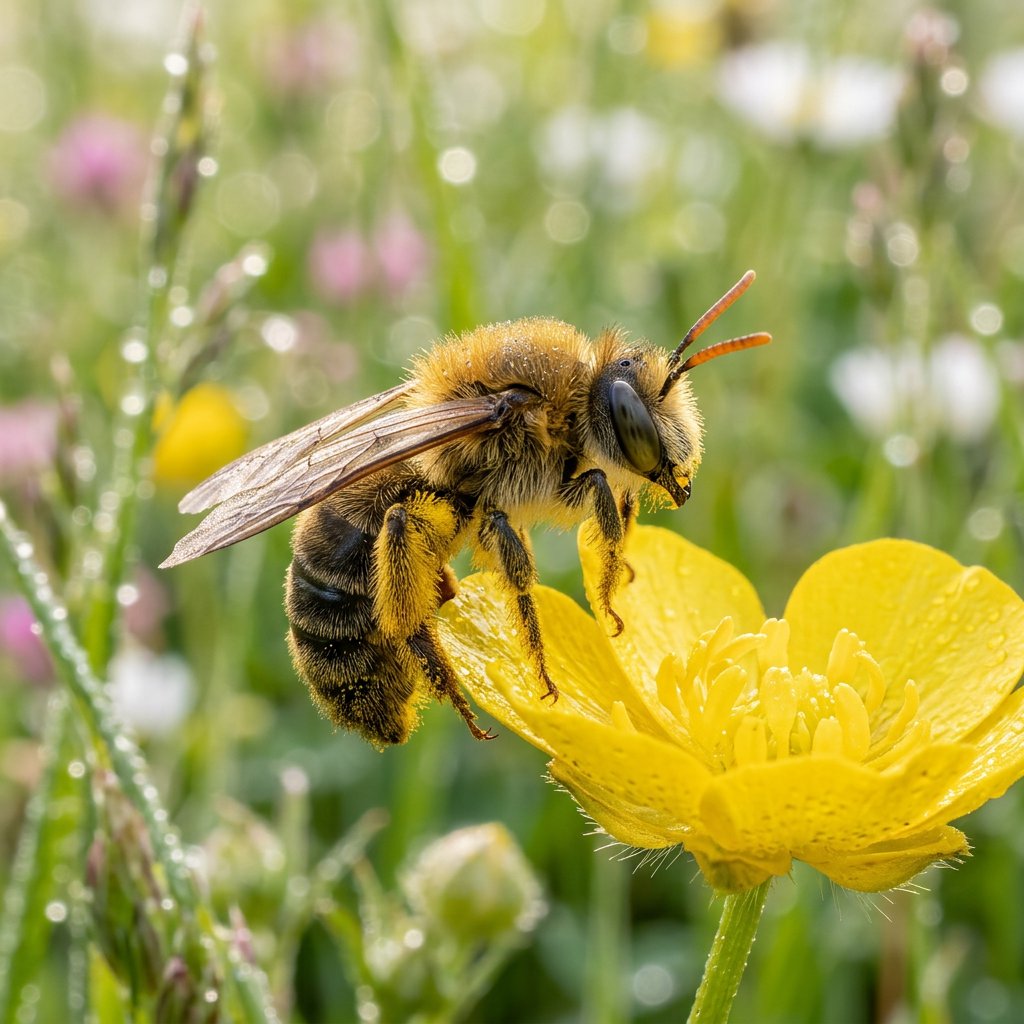
Known as the Hawthorn Mining Bee, this industrious little insect is a true herald of spring. Often found darting between the white blossoms of hedgerows, it is a solitary bee that plays a vital role in pollinating our fruit trees and wild shrubs. Unlike social honeybees, this species lives a quiet, independent life, making it a peaceful and welcome guest in any wildlife-friendly garden.
🔍 How to Identify
- 🐝 Golden Legs: The most striking feature is the bright orange-yellow hair on its hind legs (pollen baskets), which look like tiny golden chaps as the bee flies.
- 📏 Size & Shape: A medium-sized bee (approx. 7–11mm) with a dark, polished abdomen featuring thin, pale bands of hair at the edges of the segments.
- 🧥 The Thorax: Its mid-section is covered in a dense "shaggy" coat of tawny or brownish hairs, giving it a fuzzy appearance typical of the Andrena family.
🌲 Habitat & Ecology
- 🌼 Foraging Favorites: While it is a generalist, it has a famous affinity for Hawthorn and Cow Parsley. If you see a flurry of activity around a blooming Hawthorn bush in May, look closely for those golden legs.
- 🕳️ Subterranean Homes: The female digs intricate tunnels in well-drained, sandy soil or short turf to create a nursery for her larvae. You might spot small "volcanoes" of soil on the ground marking her entrance.
- 🗓️ Spring Specialist: These bees are univoltine, meaning they only appear for one generation per year, usually active only from April through June.
⚠️ Safety & Toxicity
- ✅ Gentle Nature: As solitary bees, they have no hive or queen to defend. They are remarkably docile and will only sting if physically squeezed or stepped on.
- 🩹 Low Risk: Their stinger is very small and often unable to penetrate human skin. They are completely safe to have around children and curious pets.
- 🌱 Environmental Friend: Rather than a threat, they are a benefit; their presence indicates a healthy, pesticide-free local environment.
✨ Fun Fact
The species name chrysosceles actually comes from the Greek words for "gold" (chrysos) and "leg" (skelos), perfectly describing those brilliant yellow pollen-carrying hairs that make them so easy to spot!
More Details








