Info
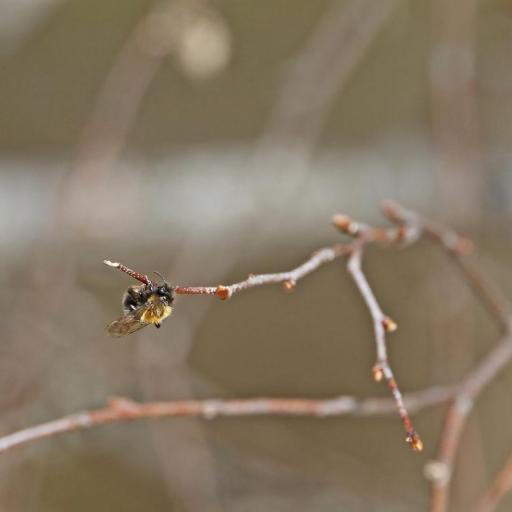
Known as Clark's Mining Bee, this fuzzy little worker is one of the earliest signs that spring has finally arrived. Often mistaken for a tiny bumblebee due to its thick, velvety coat, it is a solitary species that lives a quiet life underground. Unlike social bees, these "introverted" pollinators don't live in hives, making them gentle and fascinating neighbors for any wildlife-friendly garden.
🔍 How to Identify
- 🐝 The "Ginger" Jacket: Females are striking, sporting a dense coat of bright reddish-orange or tawny hair on their upper body (thorax).
- 🖤 Contrast Abdomen: While their "shoulders" are bright, their lower half (abdomen) is covered in sleek black hairs, giving them a distinct two-tone look.
- 🦵 Pollen Baskets: Their hind legs are equipped with thick brushes of hair designed to carry heavy loads of bright yellow willow pollen back to their burrows.
🌲 Habitat & Ecology
- 🌳 Willow Specialist: This bee is an "oligolectic" specialist, meaning it almost exclusively feeds on Willow (Salix) trees. If you have a pussy willow nearby, keep your eyes peeled for their early spring visits.
- 🕳️ Subterranean Architect: As "mining" bees, they dig deep, narrow tunnels into light or sandy soil. You might spot tiny mounds of earth (looking like mini volcanoes) on south-facing banks or at the base of trees.
- 🌸 Early Emergence: They are "early birds," often appearing in March while the air is still crisp, filling a vital gap in the ecosystem before other pollinators wake up.
⚠️ Safety & Toxicity
- ✅ Harmless Friend: Clark’s Mining Bee is exceptionally docile. Because they have no queen or hive to defend, they have no reason to be aggressive.
- 👶 Safe for All: They possess a very weak sting that they rarely use unless physically squeezed. They are perfectly safe to observe with children and pose no threat to curious pets.
✨ Fun Fact
Clark's Mining Bee has a "cuckoo" nemesis! A specific type of Nomada bee (the Early Nomad) acts as a parasite, hanging around the burrows of Andrena clarkella to sneak in and lay its eggs in the mining bee’s well-stocked nursery.
More Details








