Info
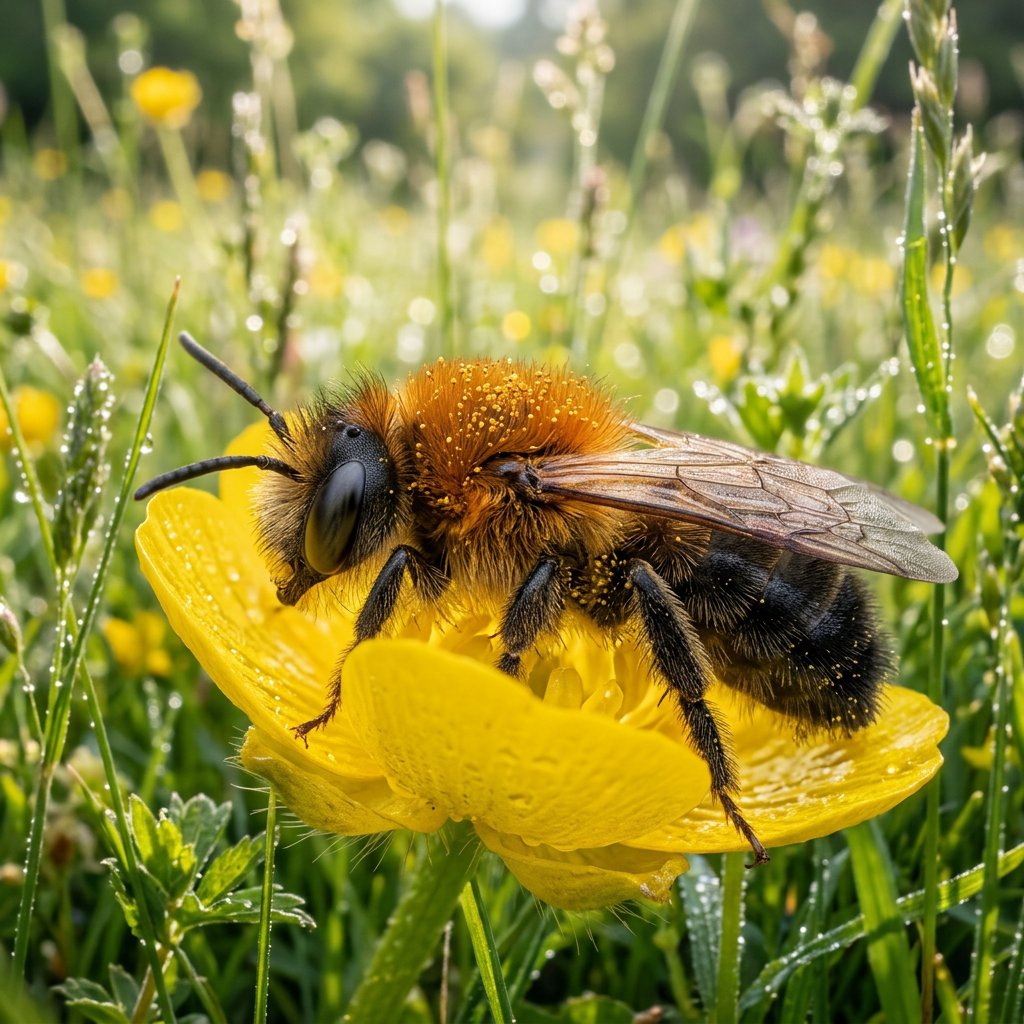
The Tawny Mining Bee (Andrena fulva) is often called the "Red Fox" of the insect world due to its stunning, thick coat of fiery orange fur. A quintessential herald of spring, this solitary bee is one of the most beloved sights in backyard gardens and parks across Europe. Despite its fuzzy, bumblebee-like appearance, it lives a quiet, independent life underground rather than in a crowded hive.
🔍 How to Identify
- 🦊 Fiery Fur: Females are covered in a dense, velvety pile of bright fox-red or orange hairs on their back (thorax) and abdomen.
- 🌑 Inky Underside: Unlike honeybees, their face, legs, and the underside of their body are coated in deep black hairs, creating a sharp color contrast.
- 🌋 The "Bee Volcano": You can often identify them by their nests—small, circular mounds of loose soil on lawns with a single hole in the center, resembling a miniature volcano.
🌲 Behavior & Habitat
- 🏡 The Suburban Resident: They thrive in well-managed gardens, short-grass lawns, and parks where the soil is easy to tunnel into.
- 🍎 Orchard Ally: These bees are exceptional pollinators for fruit trees, including apples, pears, and cherries. Because they emerge early in the spring, they often do the heavy lifting before other bee species are active.
- 🏠 Solitary but Social: While each female digs her own private burrow, they are "gregarious," meaning hundreds of females may choose to nest in the same patch of grass, creating a bustling neighborhood of tiny mounds.
⚠️ Safety & Toxicity
- 🛡️ Completely Harmless: The Tawny Mining Bee is non-aggressive. Since they don’t have a hive or honey stores to protect, they have no reason to attack humans or pets.
- 🐾 Safe for Play: While the females do have a tiny stinger, it is very weak and struggle to penetrate human skin. They will only attempt to use it if squeezed or stepped on with bare feet, and even then, the sensation is minimal.
✨ Fun Fact
Even though they are solitary, the Tawny Mining Bee is a master engineer! A single female digs a vertical shaft up to 12 inches (30 cm) deep, with several side chambers where she caches "pollen balls" for her larvae to eat once they hatch.
More Details








