Info
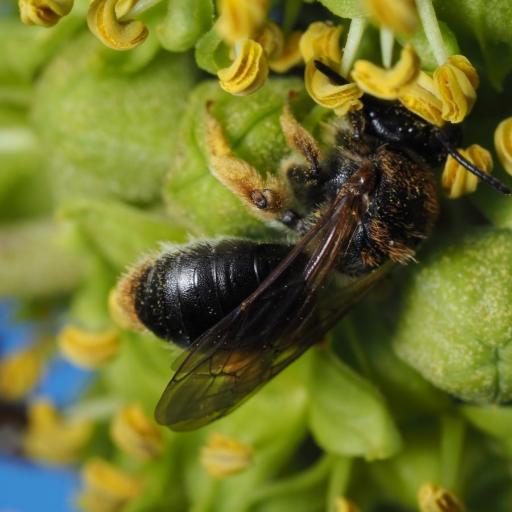
Often called the Early Mining Bee or the Orange-tailed Mining Bee, this fuzzy little pollinator is one of the first heralds of spring. Unlike social honeybees that live in crowded hives, this is a "solitary" bee—a hardworking individualist who spends her days digging tiny tunnels in the earth. With her distinct "foxy" red coat, she is a welcome guest for anyone hoping for a bountiful fruit harvest in their garden.
🔍 How to Identify
- 🦊 Foxy Thorax: The upper body (thorax) is covered in a dense, velvety layer of bright reddish-brown or "foxy" hairs.
- 🍑 The Orange Tail: Her most famous feature is the tuft of bright orange-red hair at the very tip of her otherwise black, shiny abdomen.
- 📏 Size and Shape: They are medium-sized bees, roughly 10–12mm long, often appearing slightly more slender than a typical honeybee.
🌲 Habitat & Ecology
- 🕳️ Expert Excavators: You will often find them in gardens, parks, or grassy banks. Females dig "volcano-like" burrows in light or sandy soil, leaving small mounds of earth on the surface that mark their private nurseries.
- 🍎 Fruit Tree Friend: These bees are polylectic, meaning they aren't picky eaters. They are vital pollinators for early-blooming plants, especially fruit trees like apples, pears, and plums, as well as Hawthorn and Dandelions.
- 🏠 Neighborhood Living: While they are solitary, they are quite social in their real estate choices; many females may dig their burrows close together in a "neighborhood," but they never share a front door.
⚠️ Safety & Toxicity
- 🐝 Status: Extremely Docile. These bees are incredibly gentle. Because they don't have a large hive or honey stores to defend, they have no reason to be aggressive toward humans or pets.
- 🛡️ The "Sting" Reality: While the females do technically possess a stinger, it is very weak and rarely used. They will only attempt to sting if they are squeezed or stepped on, and even then, the sting often fails to penetrate human skin. They are 100% safe to have around children.
✨ Fun Fact
The scientific name haemorrhoa comes from the Greek words for "blood" and "flow," referring specifically to the vivid red-orange hairs on the tail that look like a tiny drop of glowing embers!
More Details








