Info
Often called the Milwaukee Miner Bee, this fuzzy little architect is one of the most hardworking signs of spring. Despite its specific-sounding name, it is found across much of North America, acting as a vital early-season pollinator. They are solitary bees, meaning they don’t live in big hives with a queen, but rather lead quiet, industrious lives in the soil beneath our feet.
🔍 How to Identify
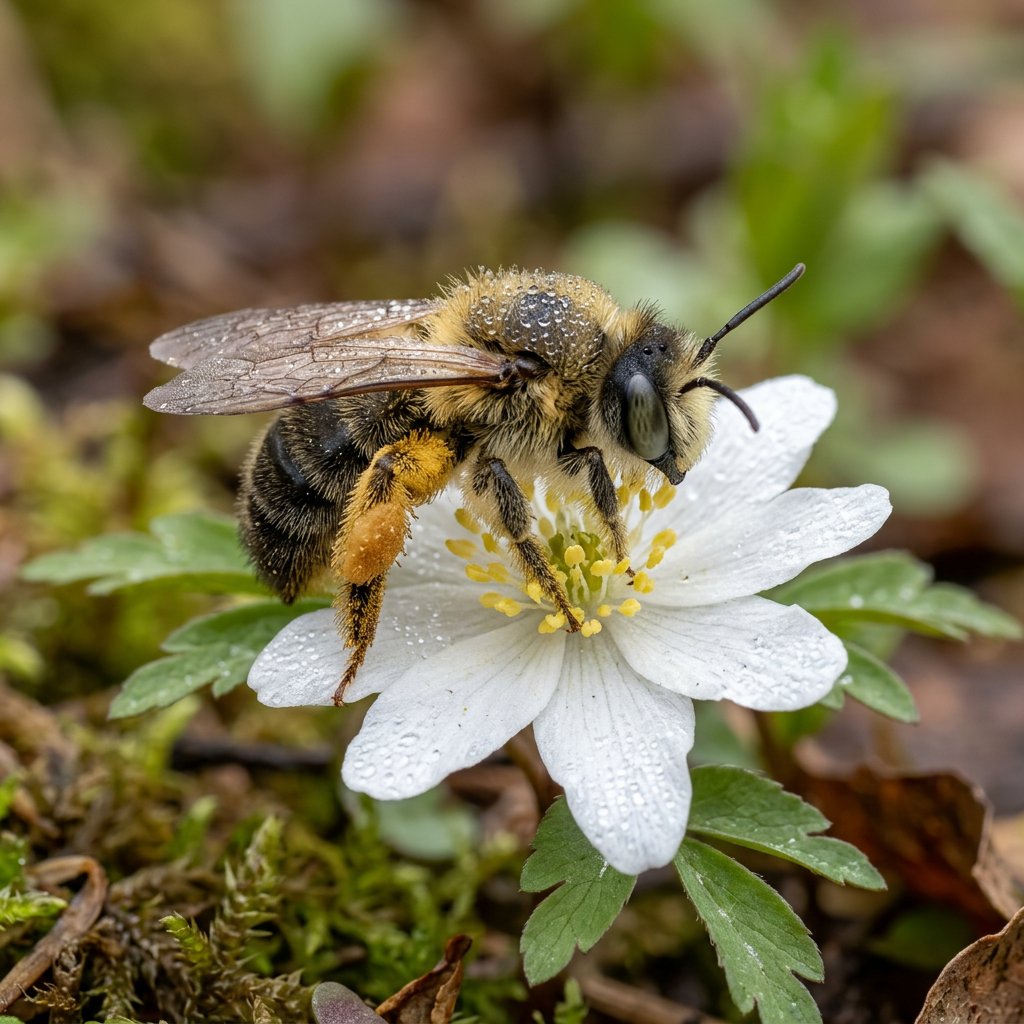
- 🐝 The "Fuzzy Jacket": Look for a dense coat of pale yellow or creamy-white hairs on its thorax (middle section), which contrasts sharply with its shiny black abdomen.
- 🦵 Pollen Chaps: The females have specialized, extra-long hairs on their hind legs called scopae that look like thick, feathery brushes when loaded with bright yellow pollen.
- 🕳️ Ground Entrances: You can identify their presence by small, neat holes in the garden soil or sparse lawns, often surrounded by a tiny mound of excavated dirt, looking like a miniature volcano.
🌲 Habitat & Ecology
- 🏡 Subterranean Suites: As "miner bees," they excavate tunnels in well-drained soil. While they are solitary, they are often "gregarious," meaning many females might build their individual apartments in the same sunny patch of dirt.
- 🌸 Early Risers: They are most active in late spring and early summer. They are generalist foragers but are particularly fond of visiting fruit blossoms, willows, and early-blooming wildflowers to gather "pollen balls" for their larvae.
⚠️ Safety & Toxicity
- 🛡️ Peaceful Neighbors: These bees are exceptionally docile. Unlike social wasps or honeybees, they have no hive to defend and will almost never sting unless you physically squeeze or step on one with bare feet.
- 👨👩👧 Family Friendly: They are perfectly safe to have around children and pets. In fact, watching them zip in and out of their ground holes is a fantastic way to teach kids about the gentle side of the insect world.
✨ Fun Fact
Even though its name, milwaukeensis, honors the city of Milwaukee where it was first studied, this bee is a world-class traveler found everywhere from the edges of the Rocky Mountains all the way to the Atlantic coast!
More Details








