Info
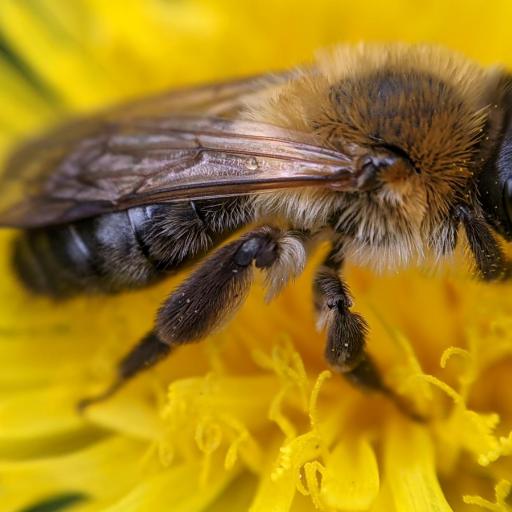
The Grey-patched Mining Bee (Andrena nitida) is one of the most handsome and common early-season visitors to spring gardens. Often mistaken for a small honeybee at first glance, this solitary bee is a tireless worker that emerges just as the first fruit trees begin to bloom. Unlike social bees that live in hives, this "lone wolf" of the insect world is a peaceful neighbor that prefers a quiet life underground.
🔍 How to Identify
- 🐝 The "Grey Patches": The defining feature is a pair of distinct white or greyish hair tufts on the sides of the second abdominal segment, giving it its common name.
- 🦊 Rusty Thorax: The upper part of its body (the thorax) is covered in a dense, velvety coat of bright reddish-orange or fox-colored fur.
- Shiny Polished Abdomen: Below the rusty thorax, its abdomen is mostly black, smooth, and notably shiny, which helps it stand out from fuzzier bumblebees.
- 🖤 Black-Haired Face: Females have a face covered in dense black hairs, which creates a sharp contrast with their bright orange "shoulders."
🌲 Habitat & Ecology
- ⏳ Early Risers: You will mostly see them between March and June. They are essential pollinators for early-flowering plants like Dandelions, Blackthorn, and Hawthorn.
- 🌋 Lawn Volcanoes: They are "mining" bees because they excavate vertical tunnels in the soil. You might spot tiny mounds of earth (looking like miniature volcanoes) in your lawn or along garden paths where they are nesting.
- 🏡 Solitary but Social: While each female builds her own nest, they often like to nest near one another in "neighborhoods" if the soil conditions are just right.
⚠️ Safety & Toxicity
- 😇 Friendly Neighbor: This bee is exceptionally docile and completely non-aggressive. Because they don't have a hive or a queen to protect, they have no reason to attack.
- 🩹 Low Risk: While females technically possess a stinger, it is very weak and they will only use it if handled roughly or stepped on with bare feet. The sting is generally much milder than that of a wasp or honeybee and poses no threat to pets or children.
✨ Fun Fact
Despite being a solitary species, the Grey-patched Mining Bee is often "robbed" by the Gooden’s Nomad Bee—a "cuckoo bee" that sneaks into the Andrena’s burrow to lay its own eggs, leaving the hardworking mining bee to inadvertently raise someone else's children!
More Details








