Info
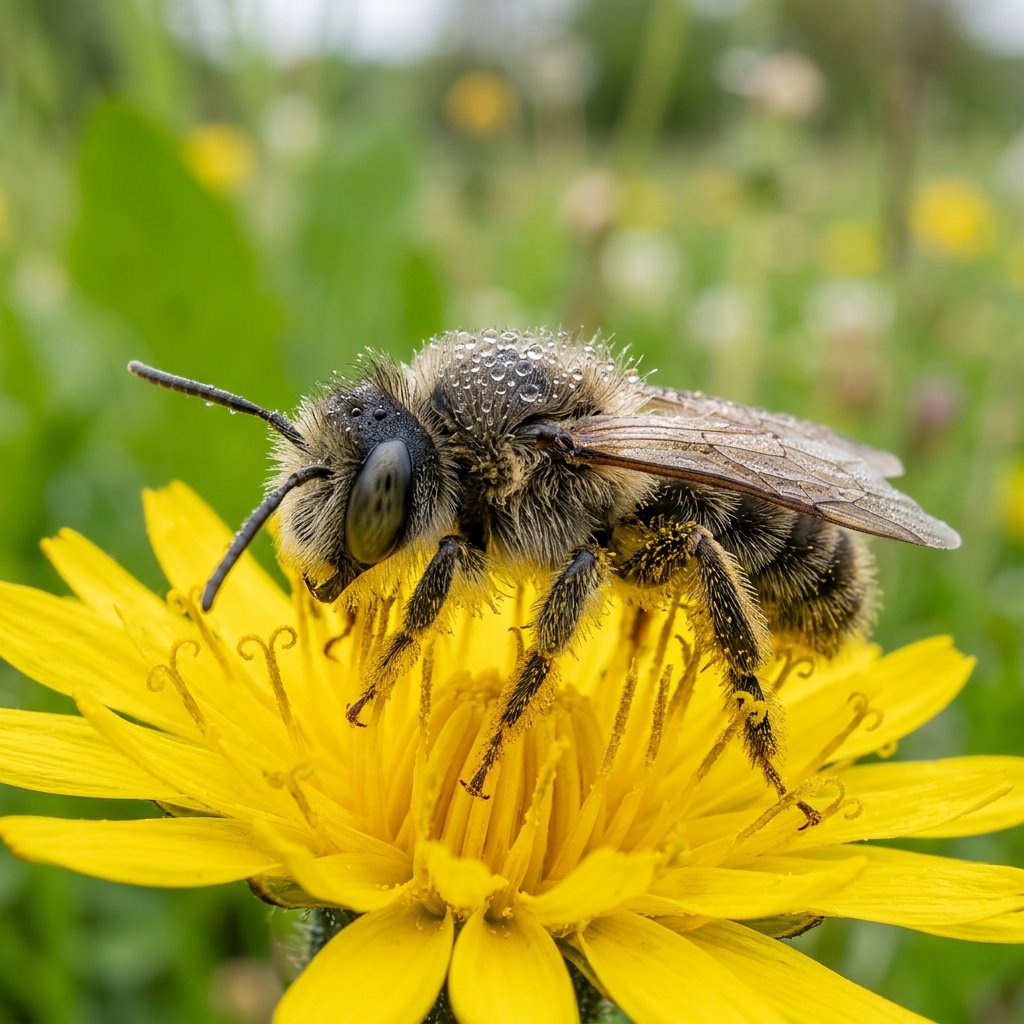
Known as the Small Gorse Mining Bee, this tiny, industrious insect is one of nature’s most efficient "underground architects." Often overlooked due to its modest size, it plays a vital role in pollinating wildflowers and garden legumes. Unlike social honeybees, this solitary bee prefers a quiet life, digging intricate tunnels in sun-warmed soil to raise its young.
🔍 How to Identify
- 🐝 Body Shape: A small, slender bee (roughly 8–11 mm) with a dark, polished abdomen that features distinct, thin bands of pale hair at the edges of each segment.
- 🦵 Pollen Brushes: Look at the hind legs; females possess dense, pale "scopa" (pollen-carrying hairs) that look like tiny, fuzzy leg warmers when they are busy foraging.
- 🌸 The Facial Foveae: Under a magnifying glass, you’ll notice velvety depressions (foveae) along the inner margins of their eyes, a signature trait of the Andrena family.
🌲 Habitat & Ecology
- 🏜️ Ground Dwellers: These bees are "miners." They seek out bare patches of light, sandy, or loamy soil—often on south-facing banks—where they excavate vertical shafts to create nursery chambers.
- 🥗 Specialized Diet: While they visit many flowers, they have a particular fondness for yellow pea-flowered plants like Gorse, Broom, and various clovers. They are a "bivoltine" species, meaning you’ll see one generation in late spring and a second in mid-summer.
- 🏡 Garden Role: They are 100% "friend." Having them in your garden means your soil is healthy and your flowers are being pollinated by a local specialist that doesn't demand a hive.
⚠️ Safety & Toxicity
- 🛡️ Non-Aggressive: As solitary bees, they have no hive to defend. They are incredibly docile and will almost never sting unless they are physically squeezed or stepped on.
- 🐾 Pet & Child Safe: Their sting is exceptionally weak and rarely manages to penetrate human skin. They pose no threat to curious pets or children playing near their nesting holes.
✨ Fun Fact
The Small Gorse Mining Bee is a master of timing; the two different generations (spring and summer) often look slightly different from one another, leading early scientists to mistakenly believe they were two entirely different species!
More Details








