Info
The Plum Miner Bee is a delightful herald of spring, often appearing in your garden just as the first fruit trees begin to burst into bloom. While they look like tiny, extra-fuzzy honeybees, they are actually solitary architects that prefer a subterranean lifestyle over a crowded hive. If you notice miniature "volcanoes" of soil in your lawn during the early morning, you likely have these gentle, hard-working pollinators as neighbors.
🔍 How to Identify
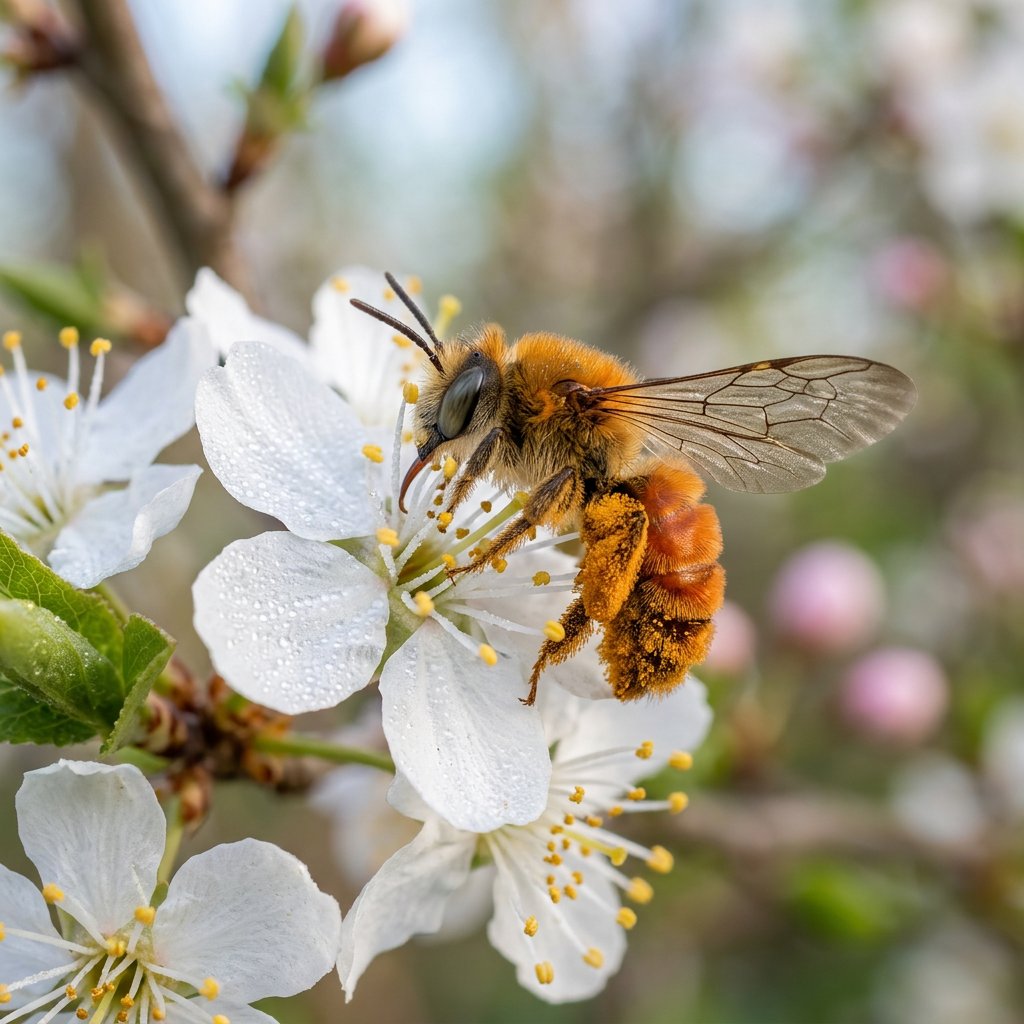
- 🐝 The Reddish Haze: They are distinguished by the dense, fox-red or orange-brown hairs on their thorax (the middle section) and the tip of their abdomen.
- 📏 Size & Shape: Generally smaller than a honeybee (about 10–12mm), with a more robust, compact body that looks "shaggy" compared to the sleekness of a wasp.
- 🧤 Pollen Baskets: Look at their hind legs; female Plum Miner Bees have thick brushes of hair designed to carry massive amounts of pollen back to their underground burrows.
🌲 Habitat & Ecology
- 🌸 Orchard Specialists: As their name prunorum suggests, they have a special affinity for the Prunus genus—plums, cherries, and peaches. They are one of the most effective pollinators for home fruit growers.
- 🕳️ Ground Dwellers: Unlike many bees that live in cavities, these bees excavate vertical tunnels in well-drained or sandy soil. While they are solitary (one female per nest), they often nest in "neighborhoods" where dozens of holes appear in the same sunny patch of grass.
- 🌤️ Spring Bloomers: They are most active from March to June. Once the fruit blossoms fade and the weather gets hot, the adults complete their life cycle, leaving their larvae safe underground until the following spring.
⚠️ Safety & Toxicity
- 🛡️ Non-Aggressive: Because they don't have a central hive or a queen to protect, Plum Miner Bees have zero interest in stinging humans or pets. They are incredibly docile and will usually fly away if disturbed.
- 👟 Pet & Child Safe: Even if a child accidentally steps on a nest entrance, the bee is more likely to be confused than angry. Their stingers are very weak and often cannot even penetrate human skin; if they do, the sensation is extremely mild compared to a honeybee.
- 🌱 Lawn Health: Do not use pesticides on their nesting holes! They do not damage the grass; in fact, their tunneling helps aerate the soil and move nutrients deeper into the ground.
✨ Fun Fact
Plum Miner Bees are "early birds" of the insect world. They have evolved the ability to vibrate their flight muscles to generate internal heat, allowing them to fly and forage on chilly spring mornings when it is still too cold for honeybees to leave their hives!
More Details








