Info
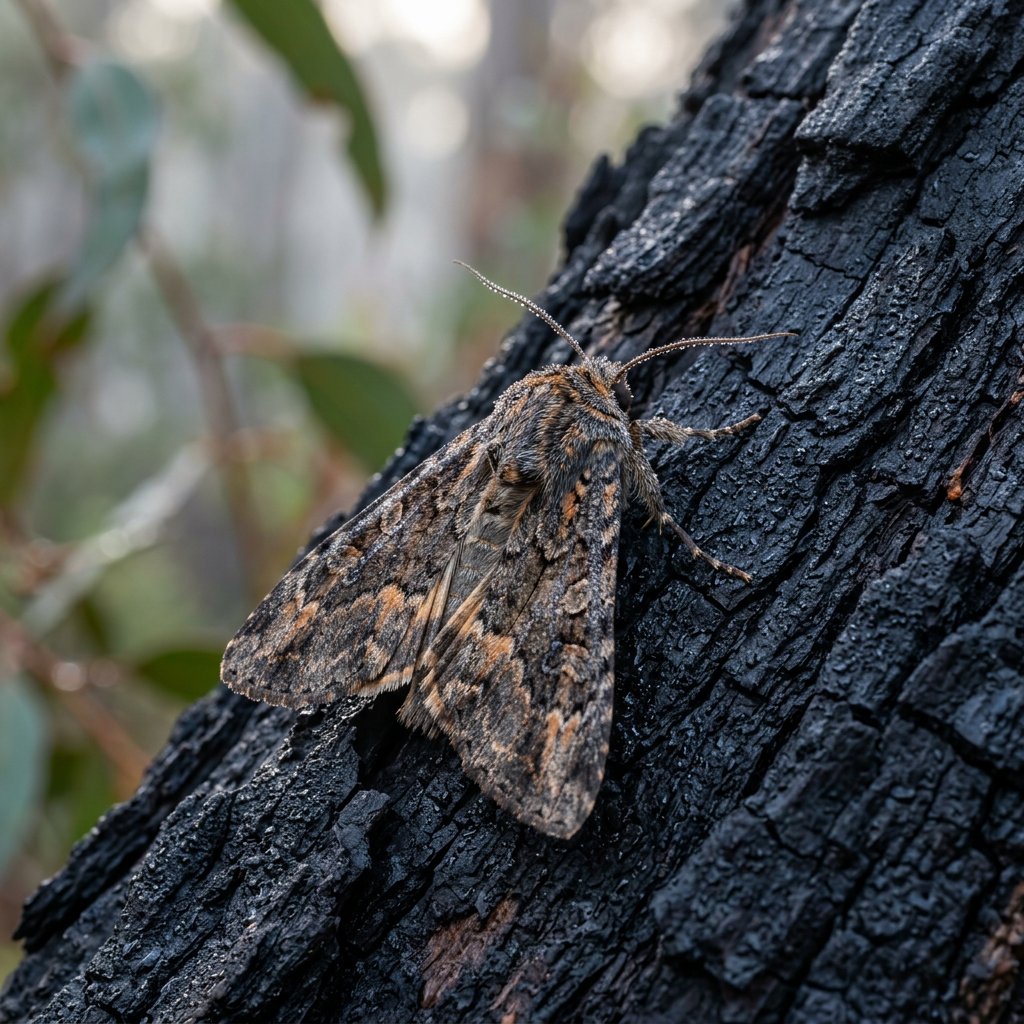
Often referred to as the Clouded Footman, the Anestia moth is a master of disguise and a true "bark-hugger." These tiny insects have evolved a remarkable survival strategy: they look exactly like the lichen and moss they live upon. While the males are delicate fliers, the females are famous for being flightless, spending their entire lives as cryptic "crawlers" on the surfaces of trees and rocks.
🔍 How to Identify
- 🦋 Sexual Dimorphism: This is their most striking trait. Males possess mottled gray, white, and black wings that mimic lichen patterns. Females, however, are often "brachypterous," meaning they have tiny, stunted wings or no wings at all, looking more like fuzzy grubs than moths.
- 📐 Small Stature: They are petite insects, usually measuring less than 20mm. When resting, the males hold their wings in a flat, triangular shape to eliminate any shadows that might give them away to predators.
- 🐛 The "Tufted" Larva: The caterpillars are dark, bristly, and covered in tiny tufts of hair. They are perfectly colored to blend into the gritty, textured surfaces of tree trunks and stone walls.
🌲 Habitat & Ecology
- 🍽️ Lichen Specialists: Unlike many garden pests that devour leaves, Anestia larvae are beneficial "cleaners." They primarily eat lichens and algae growing on old fences, rocks, and tree bark, helping to cycle nutrients in the ecosystem.
- 🏠 Urban Dwellers: You are likely to find them in gardens with established trees or stone features. They are particularly fond of damp, shaded areas where lichen growth is lush.
- 🌙 Night Flyers: The winged males are nocturnal and are frequently seen fluttering around porch lights, while the females remain stationary on bark, waiting for a mate.
⚠️ Safety & Toxicity
- 🟢 Safe & Harmless: Anestia moths are "friends" to the gardener. they do not bite, sting, or carry diseases, and they do not cause damage to wooden structures or healthy plants.
- 🧤 Sensitive Skin Alert: While the moths are harmless, the hairy caterpillars can occasionally cause mild skin irritation if handled. It is always best to use a "look but don't touch" approach with fuzzy larvae to avoid itchy rashes.
✨ Fun Fact
Because the female Anestia cannot fly to find a partner, she releases a powerful chemical "perfume" called a pheromone. The winged males have highly sensitive antennae that act like biological GPS systems, allowing them to track her scent through the darkness from impressive distances!
More Details








