Info
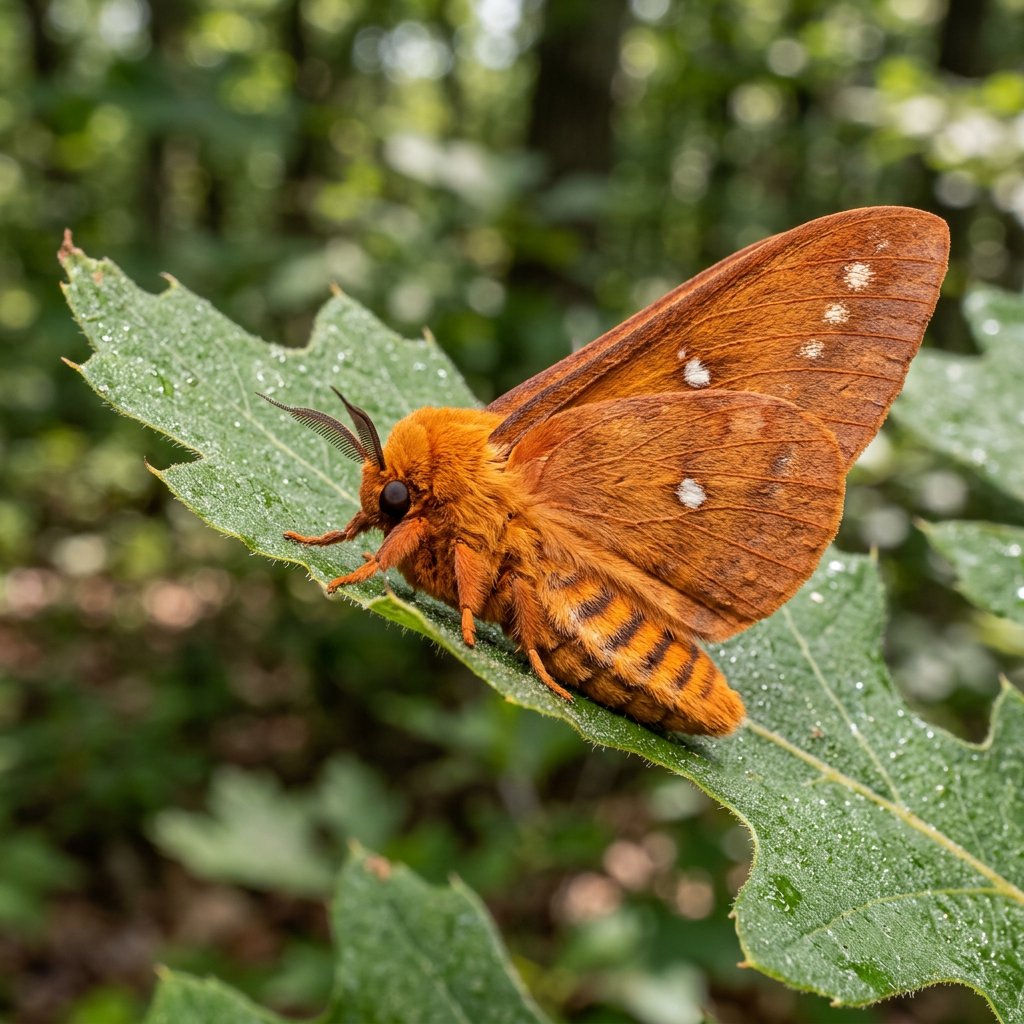
Often called "Oakworms," members of the Anisota genus are master masqueraders of the forest. While the adult moths look remarkably like fallen autumn leaves, their larvae are flamboyant, striped wanderers that occasionally "rain" down from the canopy in late summer. Though they can be a nuisance to gardeners, they are a fascinating part of the North American woodland ecosystem.
🔍 How to Identify
- 🐛 The Horned Larvae: The caterpillars are the most visible stage, featuring two long, black "horns" (fleshy filaments) just behind the head and bodies adorned with vibrant longitudinal stripes of orange, yellow, or pink.
- 🦋 Autumnal Adults: Adult moths are typically a warm, rusty orange or brownish-yellow. They have stout, furry bodies and a distinct white dot on each forewing, which helps them blend into dried foliage.
- 🥚 Golden Clusters: You will often find their eggs in large, flat clusters on the underside of oak leaves, looking like tiny, translucent beads of gold.
🌲 Habitat & Ecology
- 🌳 Oak Specialists: As their name suggests, these insects are heavily dependent on Oak trees, though they occasionally drift toward Maple or Birch. They are most active in mid-to-late summer when the leaves are mature.
- 🍂 Social Feeders: When they are young, the caterpillars are highly social and feed in "gangs" on a single leaf. As they grow, they become solitary and eventually crawl down the trunk to burrow into the soil for their winter transformation.
⚠️ Safety & Toxicity
- ✋ Handle with Care: Most Anisota species, such as the Orange-striped Oakworm, do not have stinging venom. However, the "Spiny Oakworm" variant has stiff bristles that can cause mechanical skin irritation or a mild rash on sensitive skin.
- 🐾 Pet & Garden Safety: They are generally non-toxic if a pet takes a curious sniff, but they can be "outbreak" pests. While they can defoliate a tree, they usually do so late in the season, meaning the tree is already prepared to lose its leaves and will likely suffer no long-term harm.
✨ Fun Fact
In years with high populations, you can actually hear these insects at work. The sound of thousands of tiny fecal pellets (called frass) falling from the oak canopy onto the leaves below sounds exactly like a gentle, rhythmic rain shower!
More Details








