Info
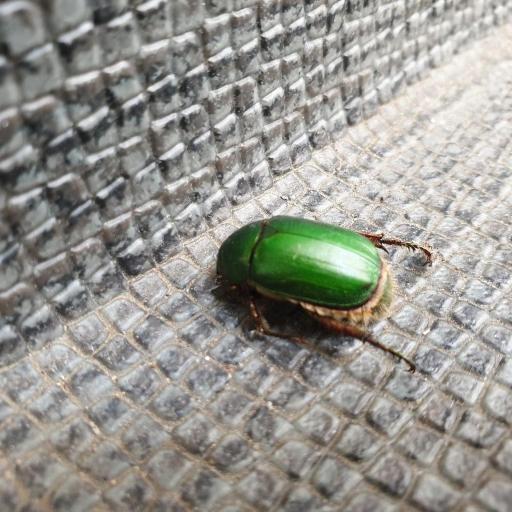
Meet the White-haired Leaf Beetle, a shimmering green resident of East Asian gardens and woodlands. Often mistaken for a common June bug, this beetle looks like it was dipped in metallic emerald paint and then lightly dusted with a fine white powder. While it is a visual treat for nature photographers, it is often viewed with a watchful eye by gardeners due to its hearty appetite for foliage.
🔍 How to Identify
- 🪲 The "Fuzzy" Shell: Its most defining feature is a coating of fine, translucent white hairs (setae) that give the metallic body a velvety, matte appearance.
- ✨ Metallic Sheen: Beneath the hairs, the exoskeleton is a deep olive or bronze-green that glints brilliantly in the sunlight.
- 🛡️ Classic Scarab Shape: It possesses a robust, oval-shaped body typical of the Scarabaeidae family, usually measuring between 12 to 15 millimeters in length.
🌲 Habitat & Ecology
- 🍃 The Leaf Buffet: As adults, these beetles are generalist herbivores. They aren't picky eaters and will happily munch on the leaves of fruit trees, ornamental shrubs, and various broadleaf weeds.
- 🪵 Life in the Dirt: Before they emerge as shiny beetles, they spend their youth underground as "C-shaped" white grubs. In this stage, they stay busy by feeding on decaying organic matter and plant roots.
- 🌙 Light Seekers: You are most likely to encounter them on summer evenings. Like many of their cousins, they are highly attracted to artificial lights and may frequently go "thump" against your window screen at night.
⚠️ Safety & Toxicity
- ✅ Harmless to Humans: Despite their somewhat "armored" look, these beetles are entirely docile. They do not bite, sting, or possess any chemical sprays that could hurt you.
- 🐶 Pet Safety: They are non-toxic to cats and dogs. If a curious pet happens to snack on one, the most they’ll experience is a bit of indigestion from the crunchy shell.
- 🌿 Garden Impact: While they are safe for people, they can be "foes" to your plants if they arrive in large numbers, as they can skeletonize leaves quickly.
✨ Fun Fact
The species name albopilosa is a literal translation of its appearance from Latin: albus meaning "white" and pilus meaning "hair." It is essentially the "White-Haired Mystery" of the beetle world!
More Details








