Info
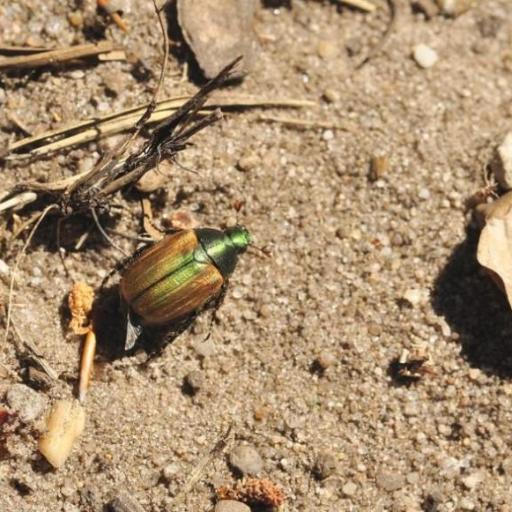
Often referred to as the Dune Chafer, the Anomala dubia is a shimmering jewel of the beetle world. Its scientific name, "dubia," literally means "doubtful," a nod to the historical confusion scientists faced when trying to classify it due to its incredibly variable colors. Whether it’s flashing metallic green or deep copper, this beetle is a common sun-loving sight in sandy coastal regions and well-drained gardens across Europe.
🔍 How to Identify
- 🎨 Iridescent Shell: The most striking feature is its polished, metallic exoskeleton. While many are a brilliant bottle-green, others appear bronze, brownish-red, or even bicolored.
- 🪲 Compact Shape: It sports a classic oval scarab silhouette, usually measuring between 12 and 15mm. It is sturdier and more rounded than a common leaf beetle.
- 📡 Fan-like Antennae: Look closely at its head; it possesses "lamellate" antennae that can open up like tiny fans to detect pheromones and plant scents in the breeze.
🌲 Habitat & Ecology
- 🏖️ Sandy Specialist: True to its name, the Dune Chafer thrives in sandy environments. In the wild, you'll find them on coastal dunes, but in residential areas, they gravitate toward gardens with loose, light soil.
- 🍽️ Dietary Habits: Adults are active during the day, especially in mid-summer, feeding on the leaves and flowers of various shrubs, including roses and brambles. The larvae, known as "white grubs," live underground and feed on the roots of grasses.
- ☀️ Sun Seekers: They are most active during hot, still afternoons. If the sun goes behind a cloud, they often tuck themselves away or remain motionless on a leaf until the warmth returns.
⚠️ Safety & Toxicity
- ✅ Harmless to Humans: The Dune Chafer is entirely "friendly" in the sense that it does not bite, sting, or carry diseases. It is safe to observe closely or gently move if it wanders indoors.
- 🌱 Garden Impact: While the larvae can occasionally stress lawn grass if present in very high numbers, the adults are generally considered minor garden guests rather than destructive pests. They might nibble a few petals, but they rarely cause long-term harm to plants.
✨ Fun Fact
The Anomala dubia is a master of disguise through color; because one individual can look completely different from another (polymorphism), early 19th-century entomologists accidentally gave this single species over 40 different names before realizing they were all the same beetle!
More Details








