Info
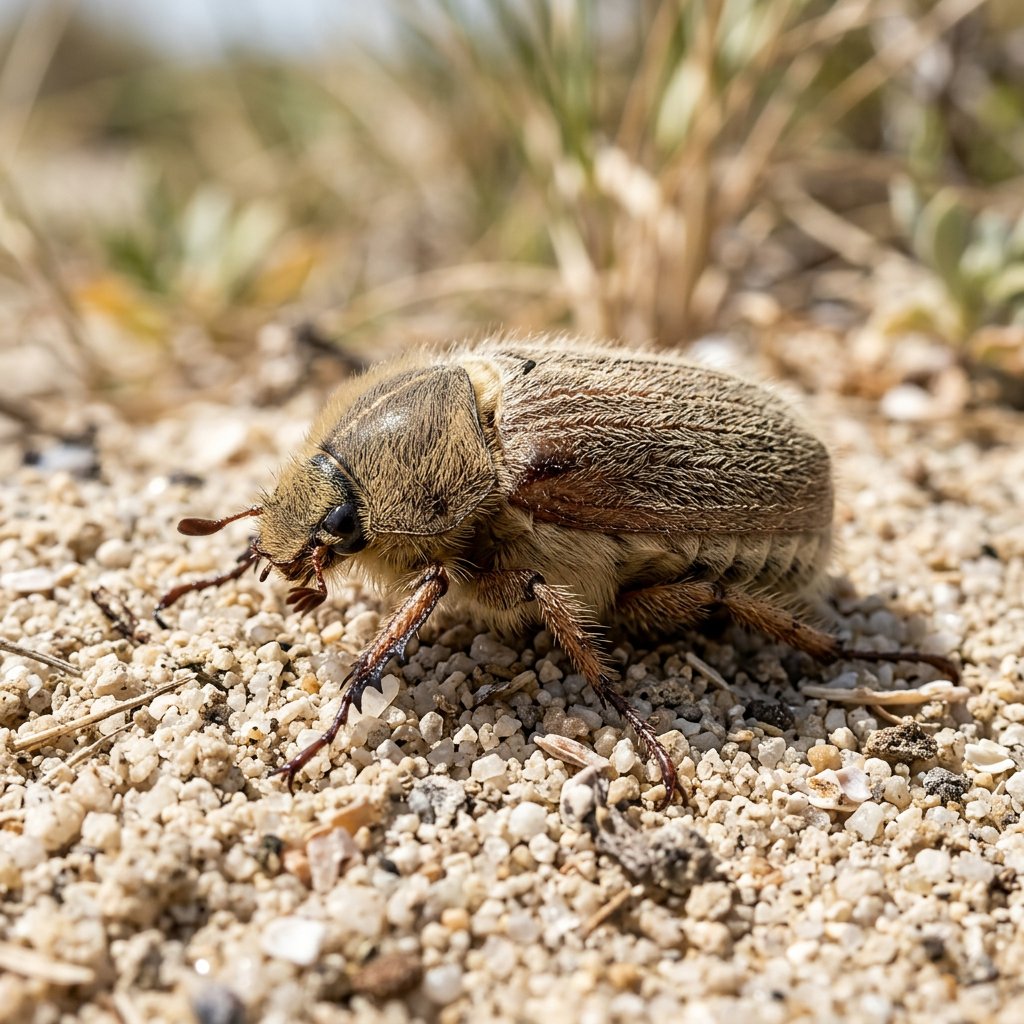
Often mistaken for a giant "fuzzy" beetle that got a bit too dusty, Anoxia villosa is a gentle giant of the Scarab family. With its thick coat of pale hair and massive, comb-like antennae, it looks like a creature dressed for a winter gala even in the peak of summer. While its size and loud buzzing flight can be startling, it is a harmless nocturnal wanderer that prefers the quiet of the forest to the chaos of the city.
🔍 How to Identify
- 🧥 The "Fur" Coat: Its most striking feature is a dense covering of velvety, yellowish-white hairs (pubescence) that give the beetle a soft, matte appearance.
- 📡 Fan-like Antennae: Males possess spectacular, oversized fan-shaped antennae which they use to "sniff" the air for female pheromones.
- 🛡️ Robust Build: A large, oval-shaped body, typically measuring 20-30mm, with a light chocolate or reddish-brown shell hidden beneath its hairy exterior.
🌲 Habitat & Ecology
- 🏖️ Sandy Soil Lover: They are most frequently found in regions with sandy soils, particularly near pine forests or Mediterranean coastal dunes, where their larvae can easily burrow.
- 🌙 Nightlife Enthusiast: Strictly nocturnal, these beetles spend their days hiding in the soil or under bark, emerging at dusk to fly. They are famously clumsy around artificial lights.
- 🌱 Root Feeders: While the adults might nibble on pine needles or foliage, the larvae (grubs) live underground for several years, feeding on the roots of grasses and trees.
⚠️ Safety & Toxicity
- ✅ Completely Harmless: Anoxia villosa does not bite, sting, or carry any toxins. They are "gentle giants" that rely on their camouflage and burrowing skills for protection.
- 🐾 Pet Interaction: They are safe for curious dogs or cats. However, their sturdy exoskeleton and hairy legs might make them a bit of a "scratchy" snack if a pet decides to investigate too closely with their mouth.
✨ Fun Fact
The impressive "fans" on the male's antennae aren't just for show; they consist of multiple sensitive plates called lamellae. When the beetle is searching for a mate, it fans these out to maximize the surface area, acting like a high-tech biological radar to pick up chemical signals from over a kilometer away!
More Details








