Info
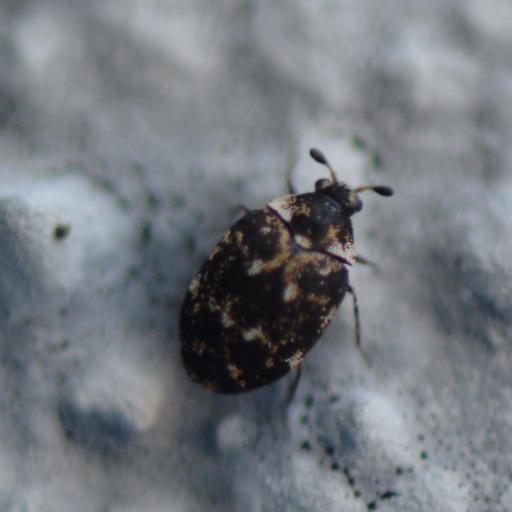
The Anthrenus museorum, famously known as the Museum Beetle, is a tiny architect of destruction with a taste for history. While it might look like a harmless, colorful speck, it is the primary antagonist for museum curators and insect collectors worldwide. This beetle has earned its name by specialized scavenging, often turning priceless taxidermy and dried biological specimens into literal dust.
🔍 How to Identify
- 🪲 Body Shape: A very small, stout beetle (about 2-3mm long) with a distinctively round, convex shape that resembles a miniature, flattened ladybug.
- 🎨 Scale Pattern: The wing covers are mottled with a mosaic of fine scales in shades of dark brown, yellowish-orange, and white, typically arranged in three wavy, indistinct horizontal bands.
- 🐛 The "Woolly Bear" Larva: The larval stage is a brown, hairy, spindle-shaped creature. It is often easier to find the shed "skins" of these larvae in drawers or corners than the beetles themselves.
🌲 Habitat & Ecology
- 🏛️ The Domestic Scavenger: Indoors, these beetles are found in dark, undisturbed places where animal proteins accumulate. They feed on wool carpets, silk, fur, feathers, and even the hair and skin cells found in common household dust.
- 🌸 The Outdoor Adult: Interestingly, the adult beetles are "vegans" by comparison. You will often find them outdoors in late spring and summer, sunning themselves on white flowers and feeding on pollen and nectar.
- 🏗️ Nesting Sites: In nature, they often inhabit bird or mammal nests, where they act as the "clean-up crew," eating leftover feathers and fur after the inhabitants have left.
⚠️ Safety & Toxicity
- 🛡️ Status: Non-toxic and non-venomous. They do not bite, sting, or carry diseases that affect humans or pets.
- 🩹 Allergy Warning: The primary "danger" comes from the larvae. Their tiny, stiff hairs (setae) can break off and cause "Carpet Beetle Dermatitis"—an itchy, red skin rash or respiratory irritation in people who are particularly sensitive to these fibers.
✨ Fun Fact
The Museum Beetle is one of the few organisms on Earth capable of digesting keratin—the incredibly tough protein that makes up your hair, fingernails, and even a rhinoceros's horn!
More Details








