Info
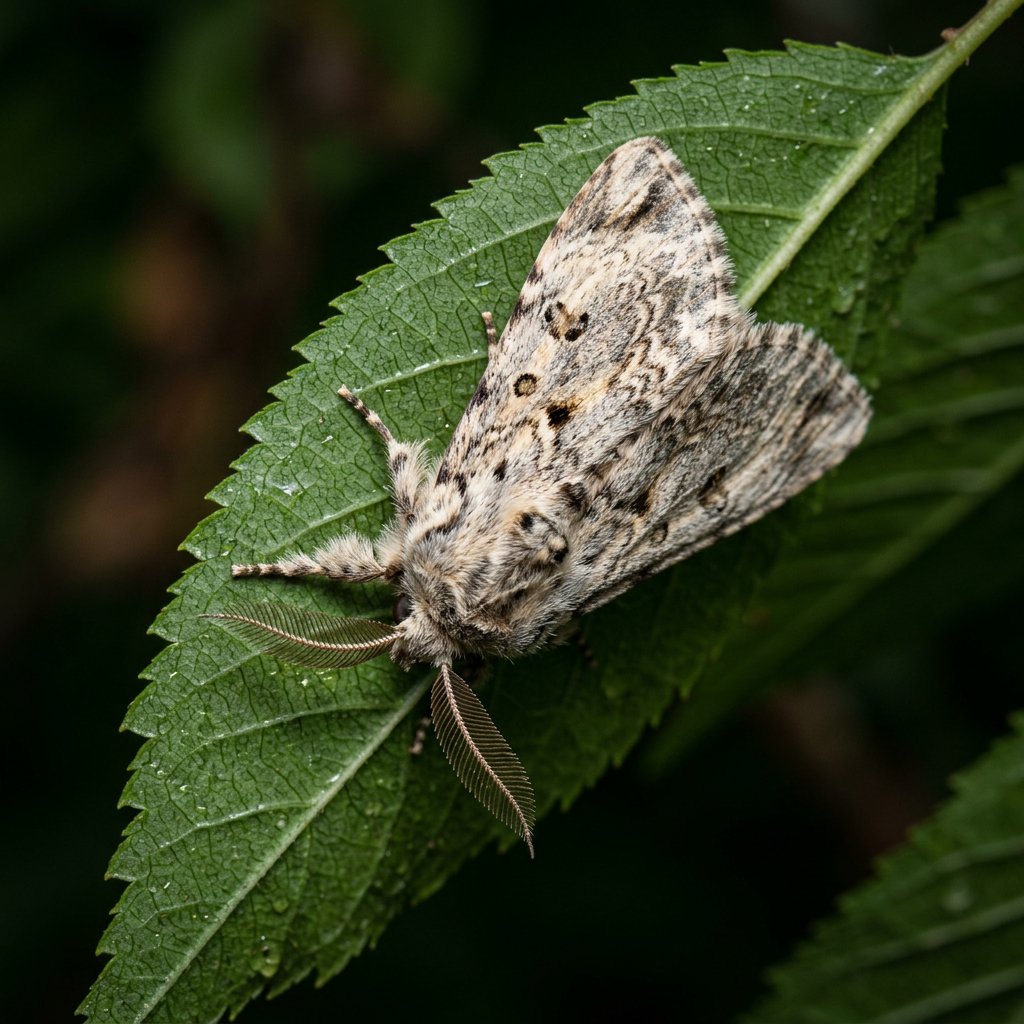
Often called the Spotted Apatelodes, this insect is a master of the "caterpillar costume party." While the adult moth is a master of camouflage, mimicking a dried, curled leaf, the caterpillar is a flamboyant, fuzzy spectacle that looks like a walking cotton ball or a miniature yeti. It’s a common sight in North American woodlands, often surprising hikers when it drops from the canopy like a tiny, golden cloud.
🔍 How to Identify
- 🪶 The "Lashes": The caterpillar is covered in dense, long white or yellow hairs, but its most striking feature is the two or three long, black hair "pencils" (tufts) sticking out near the front and one at the rear.
- 🐾 Red Boots: If you peek underneath the fluff, the caterpillar has bright reddish-pink prolegs that contrast sharply with its pale coat.
- 🍂 The Leaf-Mimic Moth: The adult moth is a soft, ash-grey color with small dark spots. When at rest, it curls its abdomen upward and holds its wings in a way that makes it look exactly like a piece of crumpled, dead foliage.
🌲 Habitat & Ecology
- 🍽️ A Diverse Menu: You’ll find these "fluff-balls" munching on the leaves of various deciduous trees, including Maple, Oak, Ash, Wild Cherry, and Ironwood.
- 🍂 Leaf Litter Hideout: Once the caterpillar has finished growing, it crawls down to the forest floor to pupate. It spends the winter tucked away in the soil or under leaf litter, waiting for the warmth of spring to transform into a moth.
⚠️ Safety & Toxicity
- ✅ Status: Generally safe and non-venomous.
- 🧴 Details: Unlike the Tussock moth or the Flannel moth (which have stinging spines hidden in their fur), the Spotted Apatelodes is considered harmless. However, people with highly sensitive skin should avoid handling them directly, as the dense hairs can occasionally cause mild mechanical irritation similar to fiberglass.
✨ Fun Fact
The Spotted Apatelodes is a professional "bluffer." Its wild, hairy appearance is designed to mimic much more dangerous, stinging caterpillars. By looking like a painful snack, it tricks birds and other predators into leaving it alone!
More Details








