Info
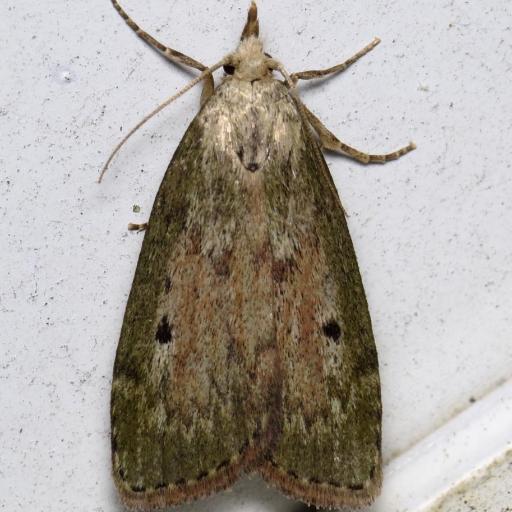
Known as the Bee Moth or the Bumblebee Wax Moth, this moth is the ultimate uninvited houseguest of the insect world. While it looks like a harmless, weathered piece of wood at rest, it leads a high-stakes life of espionage. It is famous for sneaking into the nests of bumblebees and wasps to lay its eggs, where its offspring live as "secret agents" under the noses of their hosts.
🔍 How to Identify
- 🪵 Wood-like Camouflage: Its forewings are a mottled mix of olive green, reddish-brown, and pale buff, perfectly mimicking a splinter of old wood or tree bark.
- 📐 Tent-like Posture: When resting, it folds its wings very tightly against its body in a steep, roof-like shape, making it appear much narrower than it actually is.
- 👃 The "Snout": Like many moths in its family, it has prominent mouthparts (palps) that stick out forward, giving the impression of a tiny, pointed nose.
🌲 Habitat & Ecology
- 🐝 The Nest Invader: This moth is a specialized parasite of social insects. It uses its keen sense of smell to locate bumblebee nests, wasp colonies, or even the occasional honeybee hive to deposit its eggs.
- 🕸️ Silk Fortresses: Once the eggs hatch, the larvae spin incredibly tough, yellowish silk tunnels throughout the host's nest. This webbing protects the moth larvae from the stings of the angry bees while they feast on wax, honey, and even the host's brood.
- 🏚️ Urban Dwellers: You will often find them near gardens, sheds, or old walls—anywhere a bumblebee might choose to build a nest.
⚠️ Safety & Toxicity
- 🛡️ Harmless to Humans: Despite its association with stinging insects, the Bee Moth itself has no stinger, no venom, and cannot bite humans or pets.
- 🏠 Structural Nuisance: While safe to touch, they can be a nuisance if they choose a nest inside your wall insulation. The larvae’s silk is so strong it can sometimes be difficult to clean away after they have moved on.
✨ Fun Fact
The silk produced by Bee Moth larvae is legendary for its strength! When a large group of larvae matures together, they create a dense, felt-like mass of cocoons that is so tough it is nearly impossible to pull apart with your bare hands.
More Details








