Info
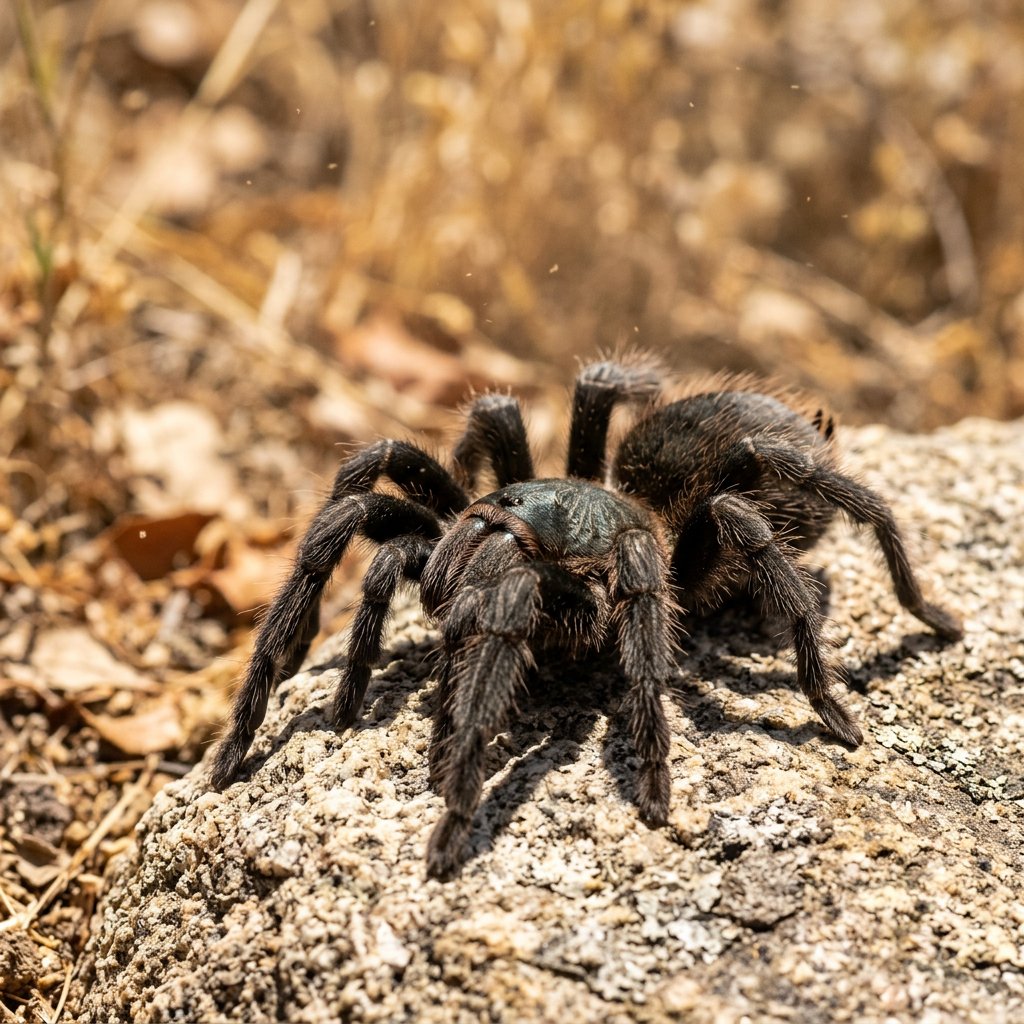
Known as the California Ebony Tarantula, this velvet-coated wanderer is one of the more elusive and sophisticated-looking spiders of the Southwest. Often spotted during the golden hours of autumn, these "gentle giants" are crucial for keeping local insect populations in check. Despite their imposing size, they are shy, quiet neighbors that prefer the solitude of their silk-lined burrows to any kind of confrontation.
🔍 How to Identify
- 🕷️ Color Palette: They sport a rich, uniform deep brown to ebony-black coat, which gives them a sleek, "velvety" appearance compared to their dustier desert cousins.
- 🧤 Velvet Texture: The entire body and legs are covered in fine, dense bristles called setae, which function as highly sensitive sensory tools to "feel" vibrations in the ground.
- 📐 Sturdy Build: They possess a thick, robust body and a leg span that can reach 4 to 5 inches, making them one of the larger tarantula species found in California.
🌲 Habitat & Ecology
- 🌵 Burrow Life: These spiders are master excavators. They spend the vast majority of their lives in underground burrows, often modified from abandoned rodent holes, which they line with silk to maintain humidity and temperature.
- 🦗 Nightly Hunter: As nocturnal predators, they act as the ecosystem's "silent security," emerging at night to ambush crickets, beetles, and other large insects that wander too close to their doorstep.
- 🍂 Autumn Wandering: If you spot one walking across a hiking trail or driveway in late summer or fall, it is almost certainly a male on a marathon quest to find a mate before the winter rains arrive.
⚠️ Safety & Toxicity
- 🛡️ Low Risk: To humans, these tarantulas are considered harmless. Their venom is chemically mild—roughly equivalent to a bee sting—and they are notoriously reluctant to bite, preferring to hide or flee.
- 🐕 Pet Caution: While not deadly, they have a unique defense mechanism: they can flick "urticating hairs" from their abdomen. These tiny barbed bristles can cause intense itching, rashes, or respiratory irritation for curious dogs or cats.
✨ Fun Fact
A female California Ebony Tarantula is a true long-term resident; while males only live for about 5 to 7 years, a female can live for over 25 years in the wild, often occupying the exact same burrow for her entire adult life!
More Details








