Info
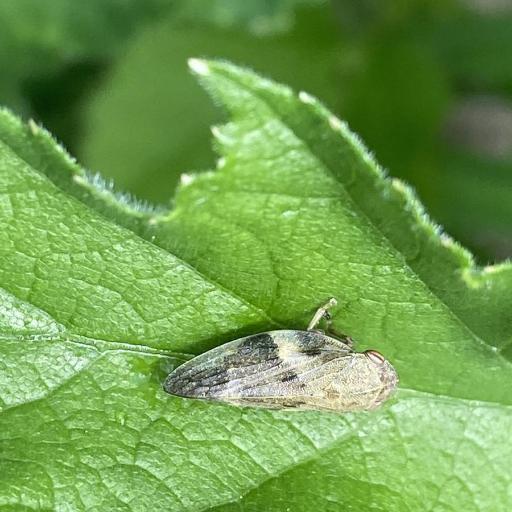
Often called the European Alder Spittlebug, this sturdy little hopper is a master of the "bubble bath" defense. Known for the mysterious clumps of foam—commonly called "Cuckoo Spit"—found on garden plants in late spring, this insect is a champion jumper that looks remarkably like a tiny, brown frog with wings.
🔍 How to Identify
- [🪽] Body Shape: A robust, diamond-shaped body with a blunt, wide head that gives it a distinct "frog-like" profile when viewed from the front.
- [🎨] Coloration: Typically mottled shades of oak-brown and grey. If you look closely at the wings, you’ll usually see two paler, creamy patches along the outer edges.
- [🫧] The "Spit": While the adults are mobile, the nymphs (juveniles) are found hidden inside thick, white clusters of bubbles on plant stems and leaf axils.
🌲 Habitat & Ecology
- [🍽️] Dietary Habits: They are specialist sap-suckers. Using a needle-like beak, they tap into the plant's "xylem" to drink nutrient-rich fluids. While they love Alder trees, they are happy to set up camp on oaks, willows, and many garden shrubs.
- [🛡️] Survival Tactics: The foam created by the nymphs isn't just for show; it acts as a high-tech survival suit. It keeps the insect moist, insulates it against heat, and tastes so bitter that most predators won't touch it.
- [🚀] The Great Leap: As adults, they are elite athletes. They can launch themselves into the air with such force that they experience G-forces that would black out a human pilot, all to escape a hungry bird or a curious gardener.
⚠️ Safety & Toxicity
- [✅] Friend to Humans: These insects are completely harmless to people and pets. They do not bite, sting, or carry any diseases.
- [🌿] Garden Impact: While the "spit" can look a bit unsightly on your prize roses or trees, they rarely do enough damage to kill a plant. If the foam bothers you, a simple blast from a garden hose is usually enough to relocate them.
✨ Fun Fact
The "spit" isn't actually spit! The nymph excretes a fluid from its rear end and then uses its legs to whip air into the liquid, creating a soapy foam that stays stable for days.
More Details








