Info
Often called the Asiatic Honey Bee or the Eastern Honey Bee, Apis cerana is the resilient, industrious cousin of the more common Western honey bee. In many Asian cultures, it is revered as a sacred worker of the forest, providing wild honey and pollinating mountain flora for millennia. While it looks similar to other bees at a glance, its sophisticated survival tactics and "never-give-up" attitude make it a true marvel of the insect world.
🔍 How to Identify
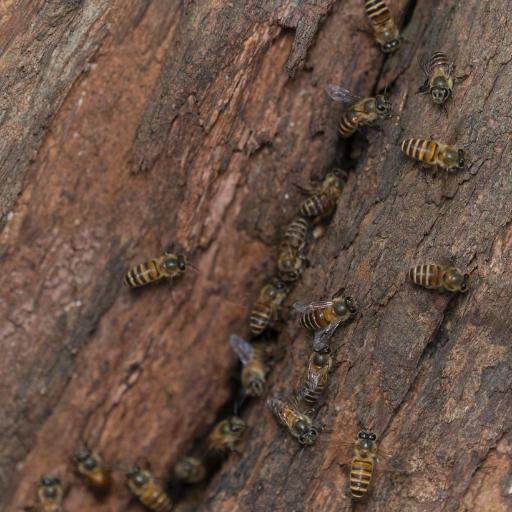
- 🐝 Abdominal Stripes: They possess very prominent, high-contrast black and golden-yellow stripes that run horizontally across their abdomen, which appear more "crisp" than those of the European honey bee.
- 📏 Compact Size: Noticeably smaller and more slender than the European honey bee (Apis mellifera), allowing them to zip through dense tropical foliage with agility.
- 🔊 Distinctive Buzz: Their wings beat at a higher frequency, creating a slightly higher-pitched hum that experienced beekeepers can distinguish from other species.
🌲 Habitat & Ecology
- 🏠 Cavity Dwellers: Unlike some wild bees that build open-air combs, these bees prefer the safety of "hollows"—think old tree trunks, rocky crevices, or even traditional clay pots used by hobbyist beekeepers.
- 🧼 Expert Groomers: They are famous for their "social grooming" behavior; they actively clean each other to remove parasites like the Varroa mite, a trait that makes them much hardier and more self-sufficient than many other bee species.
- 🏃 The Great Escape: If a predator attacks or if the environment becomes too harsh, the entire colony is known to "abscond"—meaning they pack up their honey and the queen and move house entirely to find a safer location.
⚠️ Safety & Toxicity
- 🛡️ Defensive Nature: They are generally peaceful while foraging on flowers, but they are fiercely protective of their home. If you disturb a wild nest, they may swarm to drive you away.
- 🩹 The Sting: Like most honey bees, they have a barbed stinger. For most people, a sting causes temporary sharp pain, redness, and localized swelling.
- 🚫 Allergy Warning: If you have a known bee-venom allergy, even a single sting can be dangerous. Always keep a safe distance from active hives and seek medical attention if you experience difficulty breathing after a sting.
✨ Fun Fact
The "Heat Ball" Defense: When a predatory Giant Hornet invades the hive, these bees don't just sting it—they swarm the hornet in a massive, vibrating ball. By vibrating their wing muscles, they raise the temperature inside the ball to exactly 47°C (117°F), which is hot enough to "cook" the hornet alive while the bees remain perfectly safe!
More Details








