Info
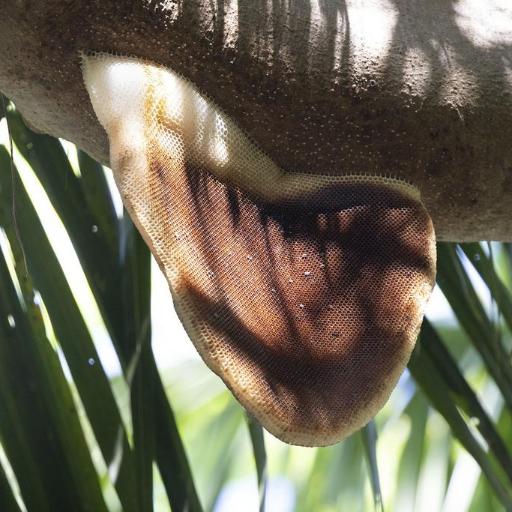
The Apis dorsata, known famously as the Giant Honey Bee, is the undisputed titan of the honey bee world. Native to the lush jungles and high cliffs of South and Southeast Asia, these bees are known for their massive, single-comb nests that hang precariously from tall trees or rocky overhangs. In many cultures, they are revered as the "Rock Bee" for their incredible ability to thrive in some of the most inaccessible places on Earth.
🔍 How to Identify
- 🐝 Imposing Size: These are among the largest honey bees in the world, measuring up to 20mm (nearly an inch) in length—significantly larger than your average garden honey bee.
- 🎨 Striking Colors: They possess a golden-yellow abdomen with distinct black bands, though their thorax is often covered in dense, velvety dark hair.
- 💨 Smoky Wings: Unlike the clear wings of many relatives, their wings often have a beautiful, dark-tinted or "smoky" appearance.
🌲 Habitat & Ecology
- 🏘️ Open-Air Architecture: Unlike other bees that hide in hollow trees, Apis dorsata builds a single, massive comb (sometimes 5 feet wide!) that hangs completely exposed in the open air.
- 🌊 The "Shimmering" Defense: When a predator like a hornet approaches, the bees perform a synchronized "wave" across the comb, similar to a stadium wave. This visual "shimmering" is designed to confuse and intimidate attackers.
- 🌙 Nocturnal Navigators: These bees are unique because they are often active at night, using the moonlight to forage for nectar in the tropical heat.
⚠️ Safety & Toxicity
- 🛡️ Status: Highly Defensive. While they are not naturally aggressive far from home, they are fiercely protective of their massive exposed nests.
- 🚫 Mass Attack Risk: If a colony feels threatened, they can mobilize thousands of bees at once. Because of their size, their sting packs a significant amount of venom. If you see a large hanging comb, it is best to keep a distance of at least 15-20 meters.
✨ Fun Fact
The Giant Honey Bee is a master of migration. Entire colonies will travel hundreds of miles to follow the blooming seasons of different flowers, returning to the exact same branch of the same tree year after year!
More Details








