Info
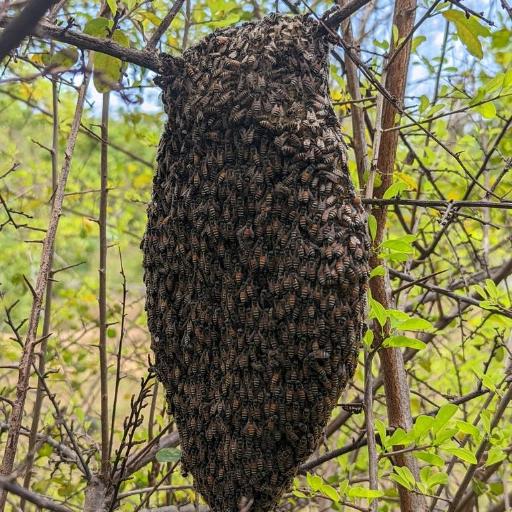
Known as the "Dwarf Honey Bee," Apis florea is one of the smallest and most primitive members of the honey bee family. Unlike their larger cousins that hide away in hollow trees or man-made boxes, these tiny architects build beautiful, single-comb nests that hang gracefully from the branches of garden shrubs or low-hanging trees. In many Asian cultures, they are celebrated as vital pollinators that bring life to tropical fruit orchards and urban gardens alike.
🔍 How to Identify
- 🐝 Diminutive Size: Significantly smaller than the common European honey bee, usually measuring only 7–10 mm in length.
- 🟧 Abdomen Coloration: The first few segments of the abdomen are a distinct, bright reddish-orange, transitioning into sharp black and white bands toward the stinger.
- 🏗️ Open-Air Nesting: They are easily identified by their nests—a single, palm-sized vertical wax comb wrapped around a small twig or branch, rather than hidden inside a cavity.
🌲 Habitat & Ecology
- 🌸 Master Pollinators: They are generalist foragers, meaning they aren't picky eaters; they visit a massive variety of wildflowers, mango trees, and garden herbs, making them a gardener's best friend.
- 🛡️ The "Shimmering" Defense: When a predator like a wasp gets too close, the colony performs a "shimmering" move where hundreds of bees flip their wings in sync, creating a visual wave that confuses the intruder.
- ☀️ Sun-Seekers: They prefer sunny, warm climates and are mostly found across Southern and Southeast Asia, often nesting in low bushes or even under the eaves of houses.
⚠️ Safety & Toxicity
- 🐝 Status: Stinging insect; generally peaceful but defensive.
- 🛡️ Details: The Dwarf Honey Bee is much less aggressive than the Giant Honey Bee (Apis dorsata). They will typically only sting if their nest is physically disturbed or if they are stepped on. While the sting is less powerful than a common bee's, it can still cause pain, swelling, and severe reactions in individuals with bee-sting allergies.
✨ Fun Fact
Unlike other honey bees that dance on a vertical surface in the dark, Apis florea performs its "waggle dance" (to tell friends where the flowers are) on the flat, horizontal top of its nest, using the direct view of the sky to navigate!
More Details








