Info
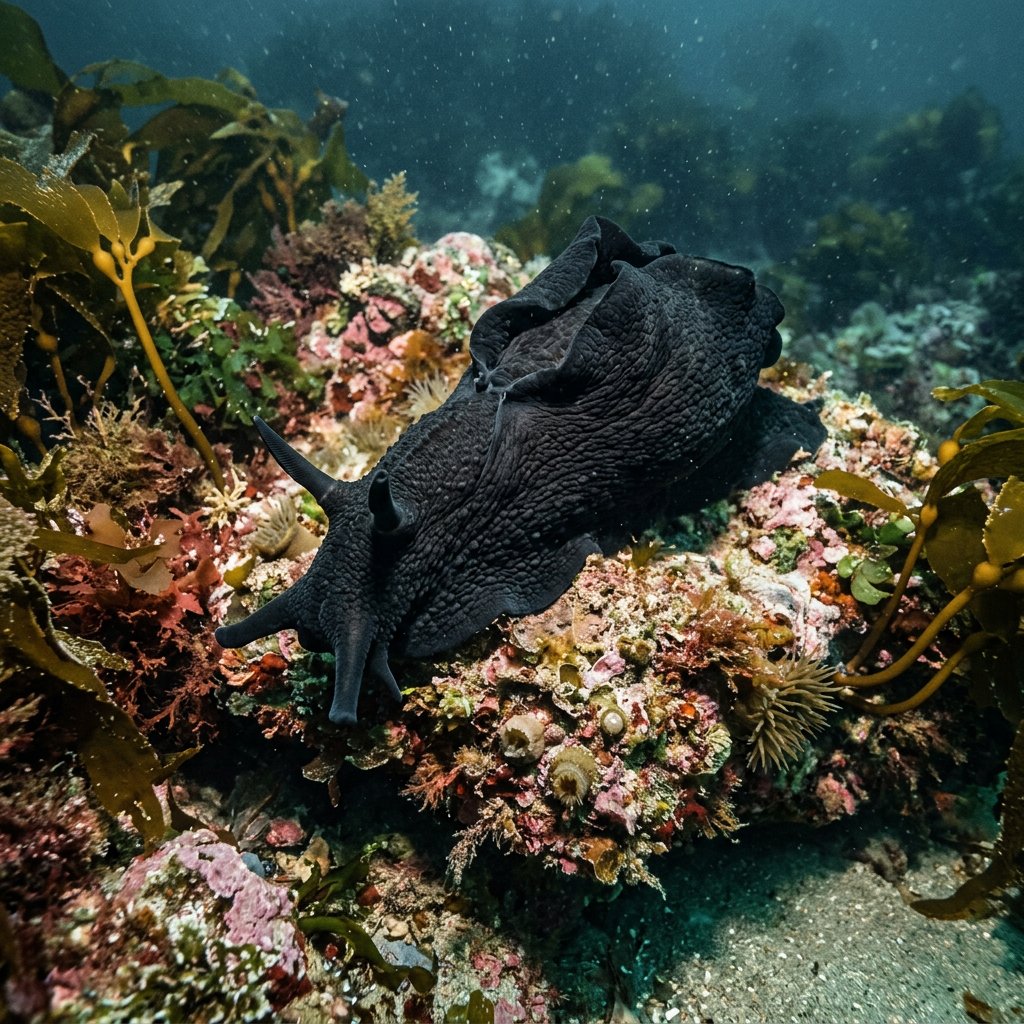
Known as the "Giant of the Tidepools," the Black Sea Hare (Aplysia vaccaria) is often mistaken for a strange alien or a massive underwater insect, but it is actually the world's largest species of sea slug. These gentle, dark-bodied mollusks can grow to staggering sizes, gliding through California’s kelp forests like heavy, velvet shadows. Despite their imposing presence, they are slow-moving herbivores that play a vital role in the coastal ecosystem.
🔍 How to Identify
- 🌊 Enormous Size: Unlike most garden slugs or insects, these can grow up to 3 feet (1 meter) long and weigh nearly 30 pounds, making them the heavyweights of the gastropod world.
- 🦇 Wing-like Flaps: They possess large, fleshy folds called "parapodia" that run along their backs, which they use for moving water over their gills or occasionally undulating through the waves.
- 🐰 Bunny Ears: They feature two prominent, ear-like sensory organs on their heads called rhinophores, which help them "smell" food and chemicals in the water.
🌊 Habitat & Ecology
- 🌿 Kelp Specialists: Their diet consists almost entirely of brown algae and kelp. The deep brown or black color of their skin is actually derived from the pigments in the seaweed they eat.
- 🪨 Rocky Coastlines: You are most likely to spot them in deep tidepools or rocky intertidal zones along the coast of California and Baja California, where they graze peacefully among the stones.
⚠️ Safety & Toxicity
- 🟢 Harmless to Touch: The Black Sea Hare is non-aggressive and does not possess a stinger, bite, or venomous spines.
- 🧪 Chemical Defense: While safe to look at, they should never be eaten. Their bodies concentrate toxins from the algae they consume, making them taste terrible to predators (and potentially toxic to humans or pets if ingested).
- 🚫 No Ink: Unlike its smaller relatives, the Black Sea Hare does not typically produce a purple ink cloud when threatened, relying instead on its size and chemical unpalatability for protection.
✨ Fun Fact
The Black Sea Hare is a biological marvel in the world of neuroscience! Because they have incredibly large and easily identifiable neurons, they have been used for decades in scientific research to help humans understand how memories are formed and stored.
More Details








