Info
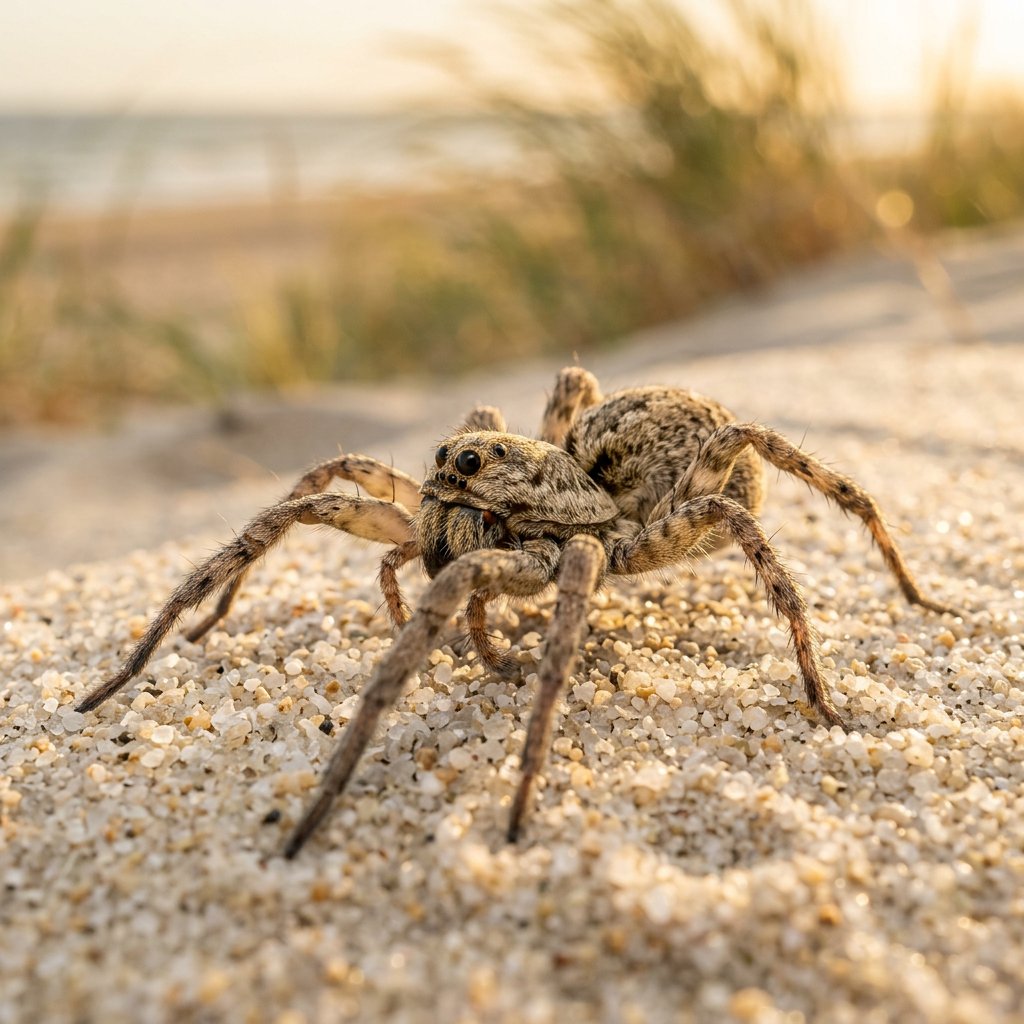
Known as the Beach Wolf Spider, this master of disguise is the ultimate shoreline ghost. While its name might sound intimidating, this spider is more of a shy beachcomber than a fierce predator to humans. It spends its days perfectly blended into the sand or pebbles, waiting for the cover of night to begin its high-speed sprints across the dunes.
🔍 How to Identify
- 🎨 Camouflage Pattern: Its body is covered in a "salt-and-pepper" mottled pattern of white, tan, and charcoal gray, making it nearly invisible against sandy or gravelly backgrounds.
- 👀 Night-Vision Eyes: It possesses two very large, prominent forward-facing eyes (among its eight total) that glint like tiny diamonds when caught in a flashlight beam at night.
- 🏃 Sturdy Build: Unlike delicate house spiders, it has a thick, hairy body and powerful, robust legs designed for sprinting across uneven terrain rather than spinning webs.
🌲 Habitat & Ecology
- 🌊 Waterfront Resident: You will almost exclusively find them on sandy beaches, riverbanks, and lake shores. They are the "wolves" of the coastline, patrolling the transition zone between water and land.
- 🕳️ Silk-Lined Retreats: During the heat of the day, they hide in shallow burrows or under driftwood. They don't use webs to catch food; instead, they use their incredible speed to run down small insects and crustaceans.
⚠️ Safety & Toxicity
- 🛡️ Status: Generally harmless and very shy. They are not aggressive and will prioritize running away or freezing in place to stay hidden.
- 🩹 The Bite: While they do have venom to subue their prey, it is not considered medically significant to humans. A bite is rare and typically results in minor localized pain or redness, similar to a mild bee sting.
✨ Fun Fact
The camouflage of the Beach Wolf Spider is so effective that even professional arachnologists often struggle to see them until they move. If one stops moving on a patch of sand, it effectively "vanishes" from sight, a phenomenon known as crypsis.
More Details








