Info
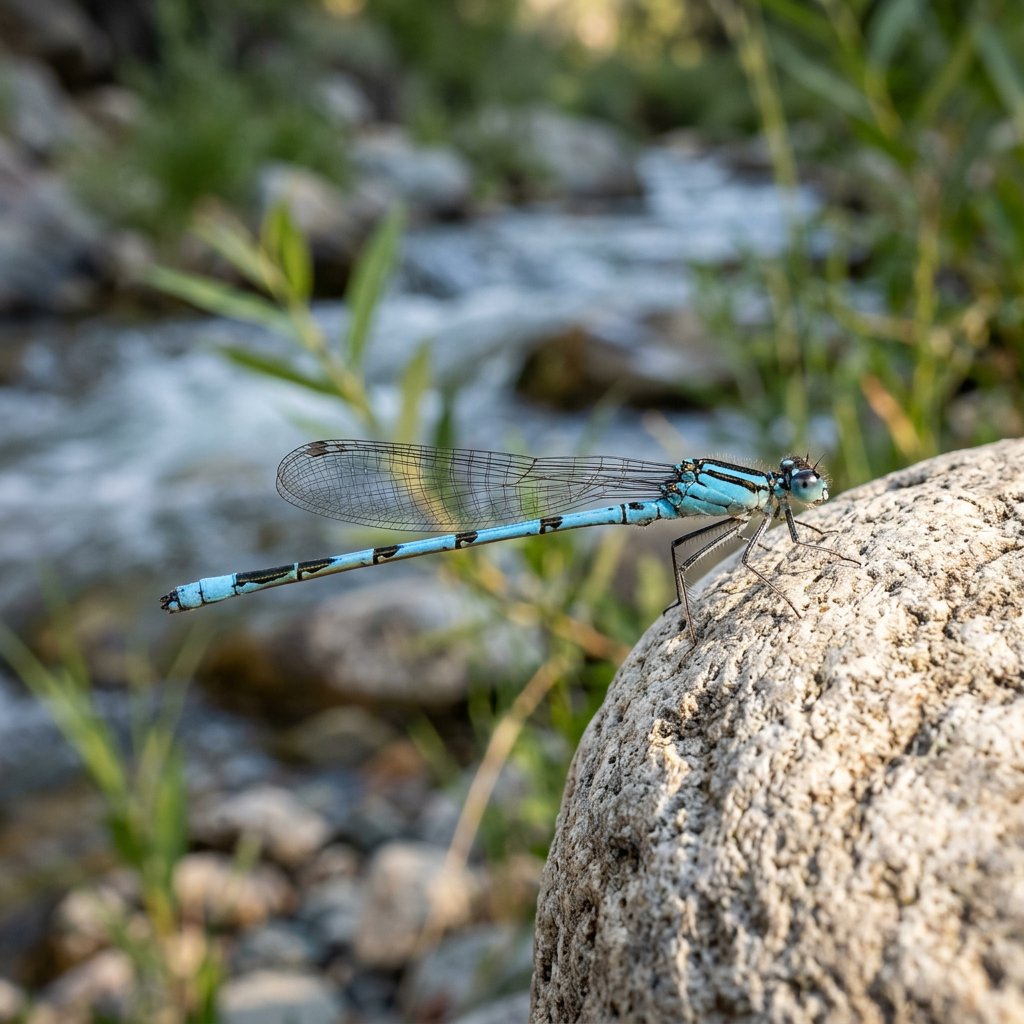
Known as the California Dancer, this striking damselfly is a common sight near sunny western waterways. While many damselflies are known for their delicate, needle-like appearance, the California Dancer is more robust and energetic, acting as a vibrant blue sentinel along stream banks. It is a definite "friend" to humans, spending its life patrolling for smaller, more annoying pests.
🔍 How to Identify
- 💎 Electric Blue Hue: Mature males are a brilliant, powdery blue with black markings. Females and younger males are often more subdued, appearing in shades of tan, brown, or grayish-blue to help them blend in.
- ✈️ Wing Position: Unlike dragonflies that hold their wings out to the sides, the California Dancer holds its wings folded tightly over its abdomen when at rest, a classic damselfly trait.
- 🏋️ Sturdy Build: Compared to other damselflies, the "Dancers" (Argia genus) have thicker bodies and longer spines on their legs, which they use like a "capture basket" to snatch prey out of the air.
🌲 Habitat & Ecology
- 💧 Moving Water Lovers: While many damselflies prefer stagnant ponds, the California Dancer is a fan of running water. You’ll frequently find them near streams, creeks, and even concrete irrigation canals.
- 🪨 Sun-Basking: They are famous for their love of sun-warmed rocks. If you walk along a rocky shoreline, you’ll see them pop up, hover briefly, and then land back on a hot stone—a behavior that sets them apart from the leaf-dwelling species.
- 🦟 Aerial Predator: These are highly efficient hunters. They feed on small flying insects like mosquitoes, gnats, and midges, making them a natural form of pest control for your backyard or local hiking trail.
⚠️ Safety & Toxicity
- ✅ Completely Harmless: The California Dancer does not sting and lacks a "stinger" entirely. While they have tiny mandibles for eating bugs, they are far too small to bite human skin.
- 🐶 Pet Safe: They are non-toxic to pets. If your dog or cat manages to catch one, there is no risk of poisoning, though these agile flyers are usually much too fast to be caught.
✨ Fun Fact
The name "Dancer" comes from their unique flight style. Instead of the steady, darting flight of other damselflies, Argia species have a jerky, fluttering motion that looks like they are performing a rhythmic dance in the air as they move between rocks.
More Details








