Info
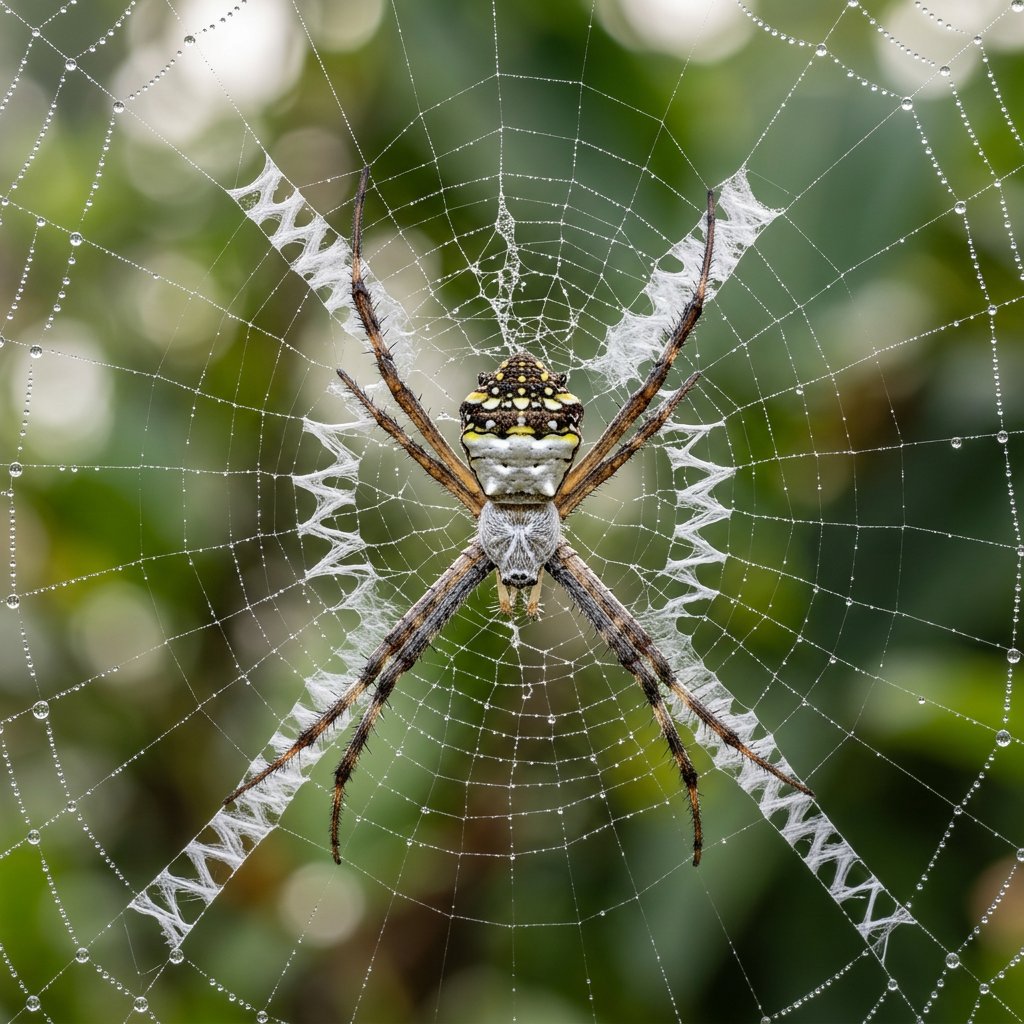
Commonly known as the Signature Spider, Argiope anasuja is a master architect found throughout South Asia. It gets its name from the thick, white zig-zag patterns it weaves into its web, looking as if the spider has literally signed its own artwork. While its large size and bold colors might seem intimidating, it is a shy gardener's ally that works tirelessly to keep flying pest populations in check.
🔍 How to Identify
- 🕸️ The Web "Signature": Look for a large, circular orb web featuring a thick, white zig-zag cross (called a stabilimentum) in the center.
- 🎨 Vibrant Abdomen: The female is much larger than the male, showcasing a pentagonal abdomen with striking horizontal bands of yellow, black, and silvery-white.
- 🕷️ The "X" Pose: When resting in the center of its web, the spider holds its legs in pairs, perfectly aligning them with the zig-zag patterns to form a distinct "X" shape.
🌲 Habitat & Ecology
- 🦗 Elite Pest Control: These spiders are exceptional predators of garden nuisances like grasshoppers, flies, and moths, making them a welcome sight for organic gardeners.
- 🌿 Low-Level Living: They prefer building their webs in low-lying shrubs, tall grasses, or between garden plants, often choosing sunny spots where insect traffic is high.
- 🪁 Extreme Dimorphism: In this species, the female is the "giant" you see; the males are tiny, dull-colored, and often hide on the outskirts of the web to avoid becoming a post-mating snack.
⚠️ Safety & Toxicity
- 🛡️ Non-Aggressive: The Signature Spider is very timid. If disturbed, it will either vibrate its web rapidly to become a blur or drop to the ground to hide rather than attack.
- 🩹 Low Risk: While it does possess venom to subdue its prey, its bite is not medically significant to humans. It is generally described as being no more painful than a mild bee sting, though sensitive individuals or small pets should still be kept at a distance to avoid unnecessary nips.
✨ Fun Fact
The purpose of the "signature" zig-zag is still a scientific mystery! Some researchers believe the silk reflects UV light to trick bees into thinking it's a flower, while others think it acts as a "warning sign" to prevent birds from accidentally flying through and destroying the spider's hard work.
More Details








