Info
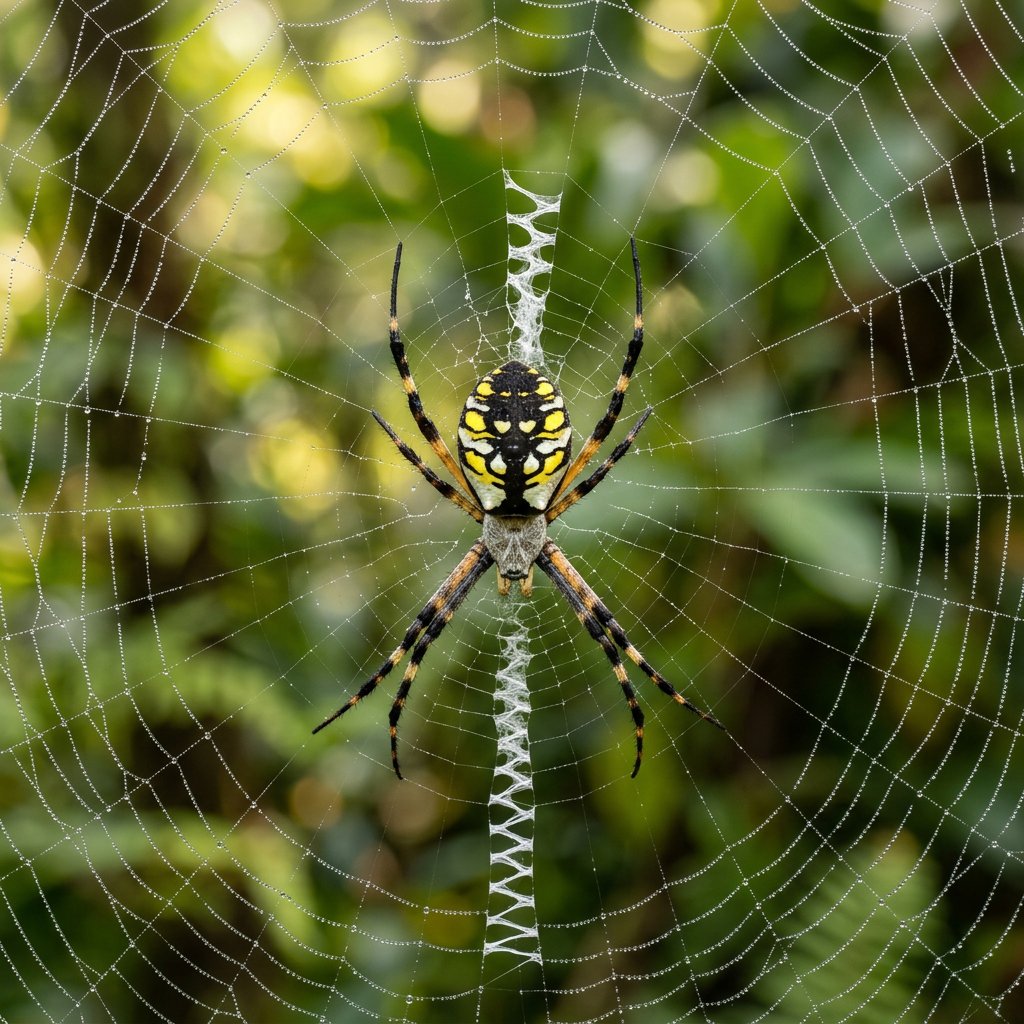
Often referred to as the Hawaiian Garden Spider or the Banana Spider, the Argiope appensa is a striking masterpiece of the tropical world. While its large size and bold, yellow-and-black patterns might look intimidating, this spider is a peaceful neighbor and a master architect. It is famous for building massive, intricate webs that often feature a mysterious "zigzag" of thick silk, making it a favorite for nature photographers across the Pacific islands.
🔍 How to Identify
- 🟡 Abdomen Pattern: The body is large and shield-shaped, featuring a bright lemon-yellow top marked with distinct black or dark brown horizontal stripes and indentations.
- ✖️ The "X" Posture: When resting in the center of its web, it holds its eight legs in pairs, forming a perfect "X" shape that makes it look like it only has four legs.
- 🕸️ Stabilimentum: Look for a thick, zigzagging ribbon of white silk (called a stabilimentum) radiating from the center of its large, circular orb web.
🌲 Habitat & Ecology
- 🦋 The Silent Guardian: As a generalist predator, it acts as natural pest control in gardens, catching everything from flies and moths to larger grasshoppers and wasps.
- 🌴 Island Dweller: It thrives in sunny, tropical environments with high humidity. While native to the Western Pacific, it is a quintessential sight in Hawaiian gardens, often stretching its web between shrubs or across hiking trails.
- 🌬️ Structural Integrity: Their webs are incredibly strong and can span several feet; the spider frequently rebuilds or repairs the structure daily to ensure it remains a sticky trap for passing insects.
⚠️ Safety & Toxicity
- 🛡️ Docile Behavior: Despite its "scary" appearance, this spider is non-aggressive. It would much rather drop from its web and hide in the grass than confront a human.
- 🐝 Low Risk: The venom is not medically significant for humans or pets. A bite is rare and typically results in minor redness or localized pain similar to a mild bee sting.
✨ Fun Fact
Scientists are still debating why these spiders weave zigzags into their webs! Some believe the patterns act as a "warning sign" to prevent birds from flying through and destroying the web, while others think the silk reflects UV light to trick pollinating insects into flying directly into the trap.
More Details








