Info
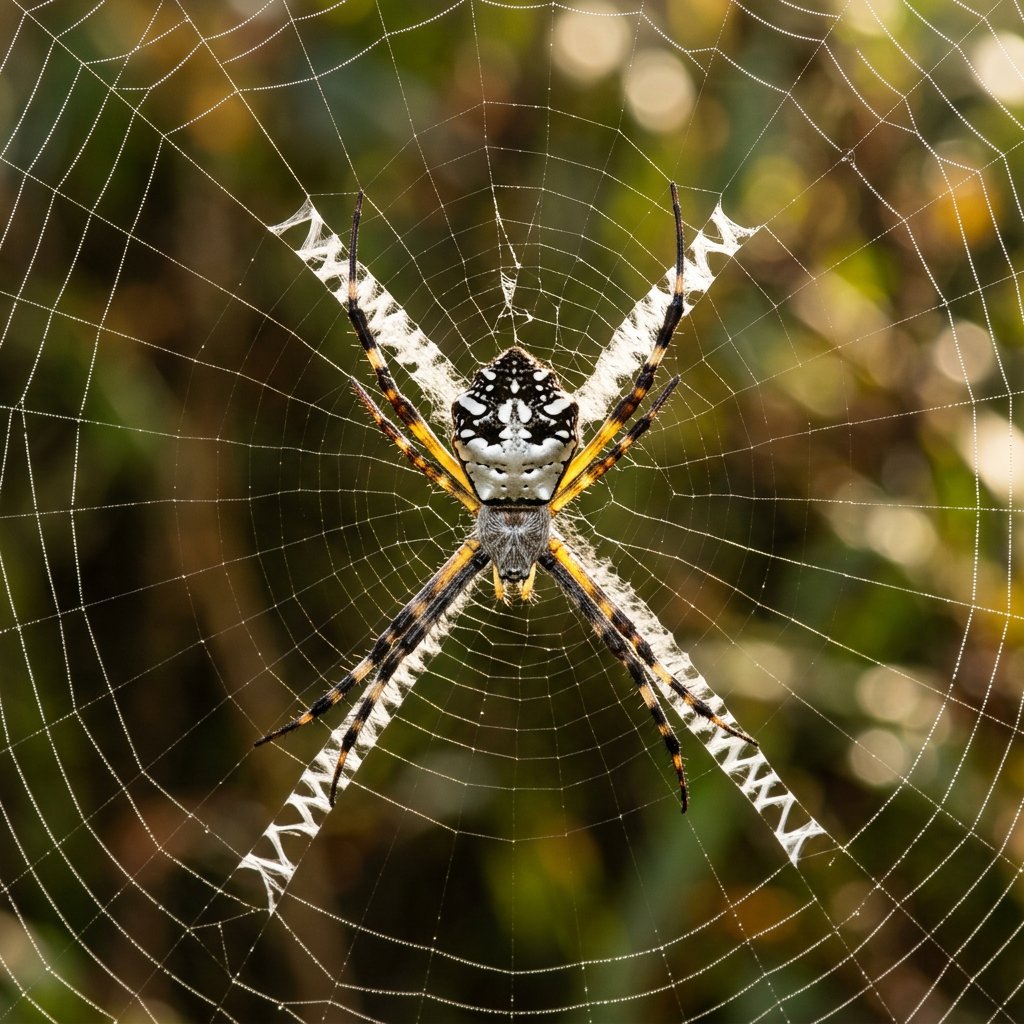
Often called the Silver Orb-weaver, this stunning architect looks like it is wearing a coat of polished liquid metal. Found throughout the warmer regions of the Americas, it is a master of geometry, weaving massive, circular webs adorned with mysterious zigzag patterns. While its size and sharp angles can be intimidating, it is a peaceful "garden guardian" that works overtime to keep annoying pest populations in check.
🔍 How to Identify
- 🥈 The Silver Shield: Its most striking feature is a flat, scalloped abdomen covered in brilliant, reflective silver hairs that shimmer in the sunlight.
- 🎨 Vibrant Underside: If you catch a glimpse of its belly, you’ll see a sharp contrast of black, yellow, and red markings, used to startle potential predators.
- 🕸️ The "X" Pose: When resting in its web, it holds its eight legs together in pairs, making the spider look like a four-legged "X" sitting at the center of a target.
🌲 Habitat & Ecology
- 🦗 Pest Controller: These spiders are elite hunters of large garden pests. Their diet consists primarily of grasshoppers, flies, and moths that bumble into their sticky traps.
- ☀️ Heat Reflector: They prefer hot, sunny environments like tall grasslands or garden shrubbery; their silver backs actually help reflect UV radiation to keep them cool during the day.
- 🏗️ Web Decorations: They are famous for spinning a "stabilimentum"—a thick, zigzagging silk ribbon in the center of the web. This may act as a "bird-warning" sign to prevent larger animals from flying through and destroying their hard work.
⚠️ Safety & Toxicity
- 🛡️ Non-Aggressive: The Silver Argiope is quite shy. If disturbed, it will either bounce its web violently to look bigger or drop to the ground to hide in the grass.
- 🩹 Low Risk: While they do have venom to subdue insects, they are not medically dangerous to humans. A bite is rare and typically results in minor redness or swelling, similar to a mild bee sting.
✨ Fun Fact
In many regions, Argiope spiders are known as "Writing Spiders" because the thick silk zigzags in their webs resemble human handwriting or cryptic symbols. In folklore, it was once whispered that if the spider "wrote" your name in its web, your luck was about to run out!
More Details








