Info
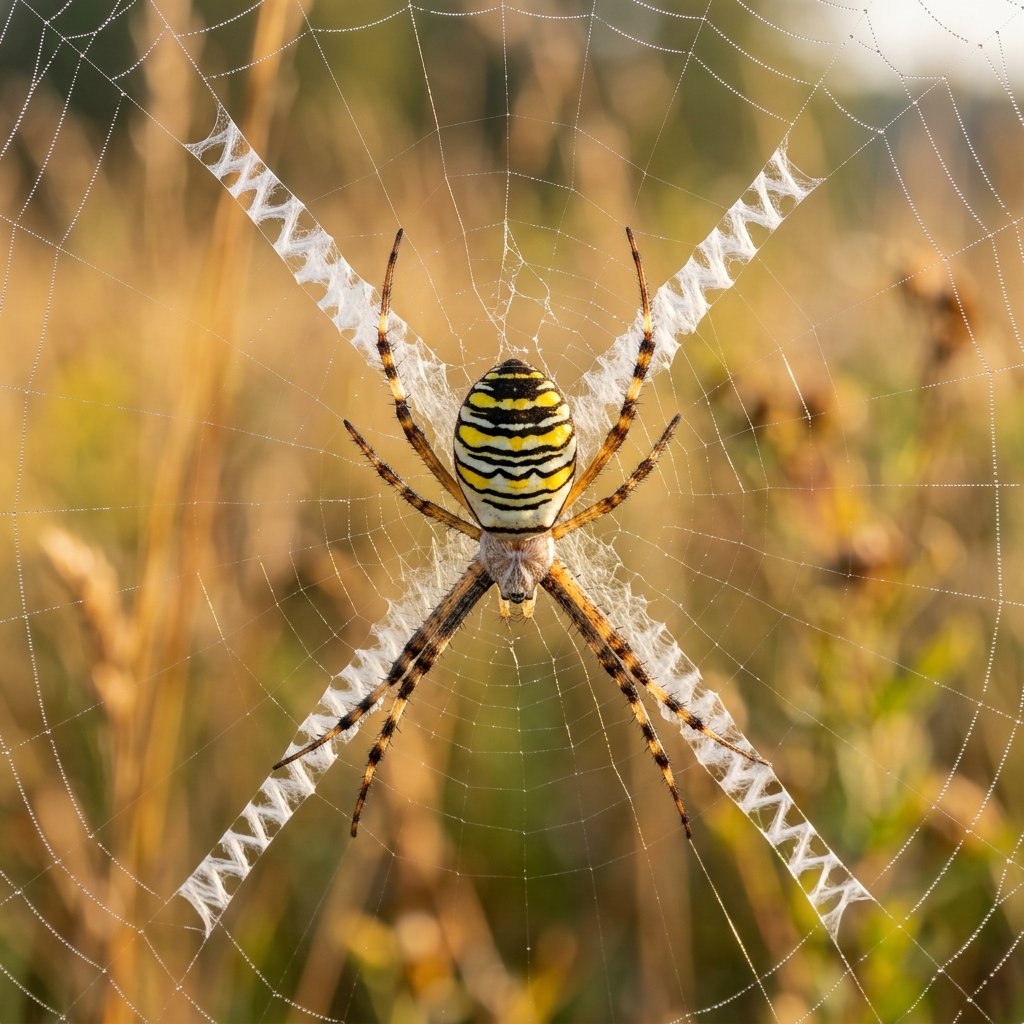
Often called the Banded Garden Spider, Argiope trifasciata is a masterpiece of natural engineering. While its striking stripes and large size might seem intimidating at first glance, it is a peaceful resident of sun-drenched gardens and tall grasslands across the globe. Known for weaving massive, wheel-shaped webs, this spider acts as a silent guardian, keeping your backyard ecosystem in balance.
🔍 How to Identify
- 🕸️ The Abdomen: A distinctive teardrop or oval shape, covered in a shimmering pattern of silver-white, yellow, and thin black horizontal bands.
- 🕷️ Long, Striped Legs: The legs are typically pale tan or orange with dark, distinct rings, often held in pairs to form an "X" shape while the spider rests in the center of its web.
- 🧶 The "Zigzag" Web: They spin a large, classic orb web that often features a thick, vertical zigzag of white silk known as a stabilimentum, which helps the web stay visible to birds.
🌲 Habitat & Ecology
- 🦗 Natural Pest Control: These spiders are voracious predators of grasshoppers, flies, and wasps. They are "sit-and-wait" hunters that provide a free, chemical-free pest control service for your garden.
- 🌾 Open Spaces: You’ll typically find them in late summer or autumn, suspended in open fields, meadows, or backyard gardens where the sun hits directly and tall vegetation provides sturdy anchors for their silk.
⚠️ Safety & Toxicity
- 🛡️ Non-Aggressive: The Banded Garden Spider is incredibly shy. If disturbed, it will usually drop from its web into the grass or vibrate the web rapidly to blur its outline rather than attack.
- 🐝 Bite Status: While they possess venom to paralyze their insect prey, it is not medically significant to humans. A bite is rare and generally feels no worse than a mild bee sting, resulting in slight redness or swelling.
- 🐾 Pets & Kids: They pose no serious threat to cats, dogs, or children. They are much more interested in catching flies than interacting with people!
✨ Fun Fact
The silver hairs on the spider's back aren't just for decoration—they act like a mirror, reflecting UV light to lure in unsuspecting insects who mistake the spider for a nectar-rich flower!
More Details








