Info
Meet the "Scuba Diver" of the arachnid world. While it is technically an arachnid and not an insect, the Diving Bell Spider is the only species of spider known to spend almost its entire life submerged under the surface of the water. Using a self-made "aqualung," it hunts, mates, and even lays eggs in a realm where no other spider dares to tread.
🔍 How to Identify
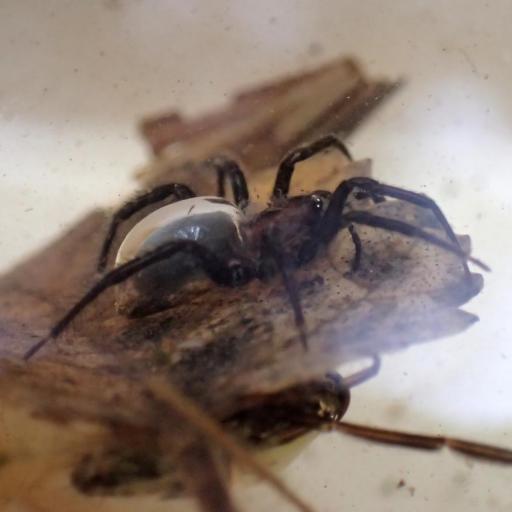
- 🤿 The Silver Coat: When underwater, this spider appears to be made of polished silver. This is actually a thin layer of air trapped against its water-repellent body hairs.
- 🕷️ Velvety Build: Out of the water, it looks like a typical dark brown or greyish spider with a velvety abdomen and long, sturdy legs.
- 🏠 The Diving Bell: You’ll likely find it near its "home"—a silk web spun between aquatic plants that looks like a shimmering, air-filled balloon or thimble.
🌊 Habitat & Ecology
- 💧 Freshwater Specialist: This spider prefers still or very slow-moving freshwater, such as ponds, marshes, and ditches with plenty of aquatic vegetation to anchor its web.
- 🍴 Underwater Hunter: Unlike many land spiders that wait for prey to hit a web, the Diving Bell Spider is an active predator. It darts out from its bubble to snatch water insects, crustacean larvae, and even tiny tadpoles.
- 🌬️ The Air Lift: To keep its home oxygenated, the spider frequently swims to the surface, catches an air bubble between its hind legs and abdomen, and carries it back down to "refill" its bell.
⚠️ Safety & Toxicity
- 🟡 Status: Not aggressive but capable of a defensive bite.
- 🩹 The Bite: Because it has to pierce the thick shells of aquatic larvae, its fangs are quite strong. A bite is often compared to a wasp sting—painful and may cause localized swelling, but it is not considered medically dangerous to healthy humans.
- 🚫 Handling: It is best to observe these creatures through the glass of an aquarium or from the bank of a pond. They are delicate and can be stressed easily if removed from their watery home.
✨ Fun Fact
The spider’s "diving bell" actually works like a physical gill. Because of the way gas exchange works, the silk bubble can actually pull dissolved oxygen directly from the surrounding water, allowing the spider to stay submerged for long periods without needing to surface for a refill!
More Details








