Info
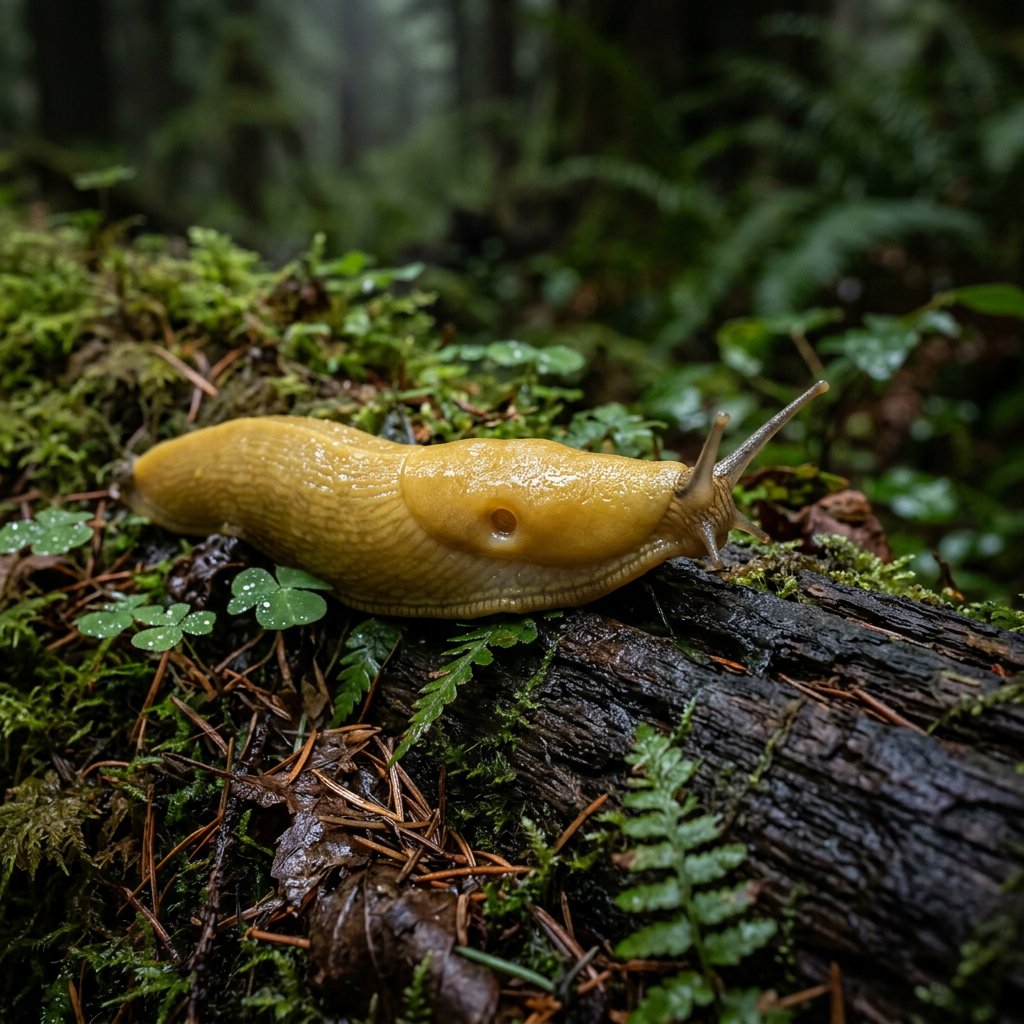
The California Banana Slug (Ariolimax dolichophallus) is a vibrant, slow-moving celebrity of the Pacific coast. Known famously as the beloved mascot of UC Santa Cruz, this bright yellow gastropod is often mistaken for a piece of discarded fruit on the forest floor. Beyond its striking looks, it is a vital "janitor" of the redwood forests, turning decaying matter into rich soil.
🔍 How to Identify
- 🍌 Vibrant Coloration: While they are most famous for their bright "banana" yellow, they can also appear greenish, tan, or even white depending on their diet and moisture levels.
- 🕳️ The Breathing Hole: Look for a prominent opening on the right side of the mantle (the "hood" behind the head); this is the pneumostome, which leads to their single lung.
- 🐌 Impressive Scale: This is one of the largest slugs in the world, often reaching lengths of 6 to 8 inches with a thick, muscular body.
- 👁️ Sensory Tentacles: They possess two pairs of tentacles: the top pair senses light and movement, while the lower pair provides a sense of smell and touch.
🌲 Habitat & Ecology
- 🍂 Nutrient Recyclers: As detritivores, they play a crucial role in the ecosystem. They consume fallen leaves, mushrooms, and animal droppings, breaking them down into nutrients that help the forest thrive.
- 💧 Moisture is Life: They are strictly found in damp, shaded environments, particularly the temperate rainforests and redwood groves of coastal California. To survive, they produce a thick layer of mucus that prevents them from drying out.
- 🛤️ The Slime Highway: Their slime is a marvel of engineering—it acts as both a lubricant to help them glide over sharp needles and an adhesive that allows them to crawl up vertical surfaces.
⚠️ Safety & Toxicity
- 🧼 Status: Generally safe and non-aggressive. They do not bite or sting.
- 👅 The Numbing Effect: Their slime contains a mild anesthetic. While not "toxic" in the traditional sense, a predator (or a curious pet) that tries to eat a slug will experience a numbing sensation in their mouth, which usually discourages a second bite.
- 🧴 Handle with Care: If you must touch one, ensure your hands are wet and free of soaps or lotions, which can harm their sensitive skin. Always wash your hands afterward, as wild mollusks can carry parasites.
✨ Fun Fact
📏 Living Up to the Name: The species name dolichophallus literally translates from Greek to "long phallus." This refers to their reproductive organs, which can be as long as the slug's entire body! During mating, if the organs become stuck, one slug may chew off the other's organ—a process known as apophallation—after which the slug lives on as a female.
More Details








