Info
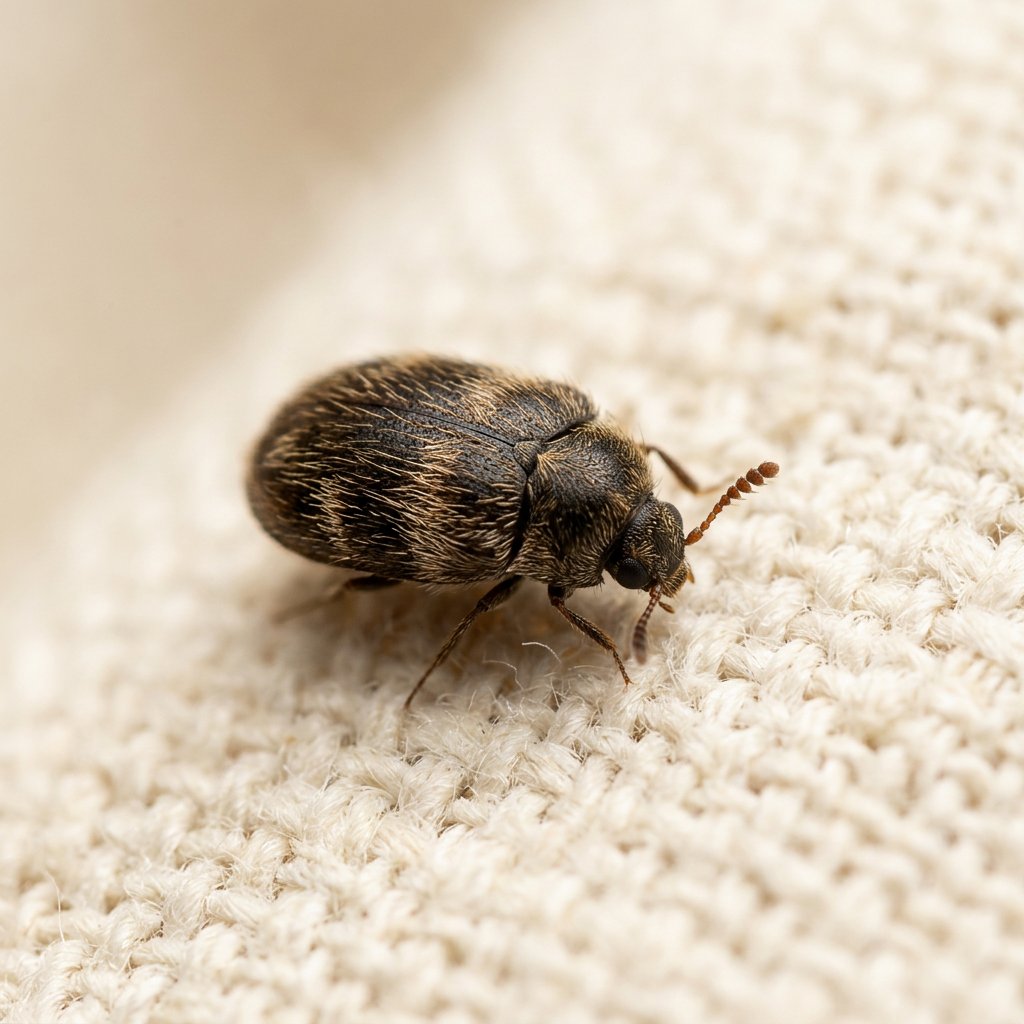
Meet the "Vodka Beetle," a tiny globetrotter that originated in the warm climates of Africa but has since successfully colonised cozy apartments across Europe and Asia. Despite its spirited nickname, this beetle isn't looking for a cocktail; it's a common synanthropic guest—meaning it lives alongside humans—often found hiding in the quiet corners of wardrobes or fluttering near windowsills.
🔍 How to Identify
- 🪲 Bicolored Body: The adult beetle is tiny (about 2–5 mm) and oval-shaped. It features a dark, almost black head and thorax, which contrasts sharply with its lighter, reddish-brown wing covers (elytra).
- 🐛 Bristly Larvae: The larvae are more distinctive than the adults, appearing carrot-shaped and golden-brown. They are covered in stiff hairs and sport a noticeable tuft of long bristles at their rear end.
- 🪽 Slow Flight: Adults are capable fliers and are often spotted moving sluggishly toward natural light sources, looking like small, dark "pills" on white window frames.
🏠 Habitat & Ecology
- 🧶 The Closet Scavenger: While the adults are mostly interested in outdoor pollen and nectar, the larvae are the real residents of your home. They thrive in dark, undisturbed areas like baseboards, under carpets, or inside closets where they feed on dried organic matter.
- 🍽️ Keratin Gourmet: The larvae have the specialized ability to digest keratin. This means they can make a meal out of wool sweaters, silk scarves, feathers, animal hair, and even the "dust bunnies" that accumulate under furniture.
- 🌍 Climate Hitchhiker: Because they cannot survive harsh winters outdoors in northern climates, they have become experts at living in heated buildings, making them a year-round indoor neighbor.
⚠️ Safety & Toxicity
- 🛡️ Non-Aggressive: The Brown Carpet Beetle is a "nuisance pest" rather than a physical threat. They do not bite, sting, or transmit diseases to humans or pets.
- 🧴 Allergy Alert: While they aren't toxic, the tiny, shed hairs from the larvae (called setae) can cause "carpet beetle dermatitis" in sensitive individuals. This is an allergic reaction that looks like itchy, red bumps or a rash.
- 👗 Property Damage: The primary risk is to your belongings. If left unchecked, the larvae can chew irregular holes through expensive natural fabrics, taxidermy, or museum collections.
✨ Fun Fact
🍸 The Namesake: Its nickname, the "Vodka Beetle," comes from the fact that it was first described in 1923 by the Russian entomologist E.S. Smirnov in Moscow. Because of its prevalence in Russia and its scientific name smirnovi, it became humorously associated with the famous vodka brand!
More Details








