Info
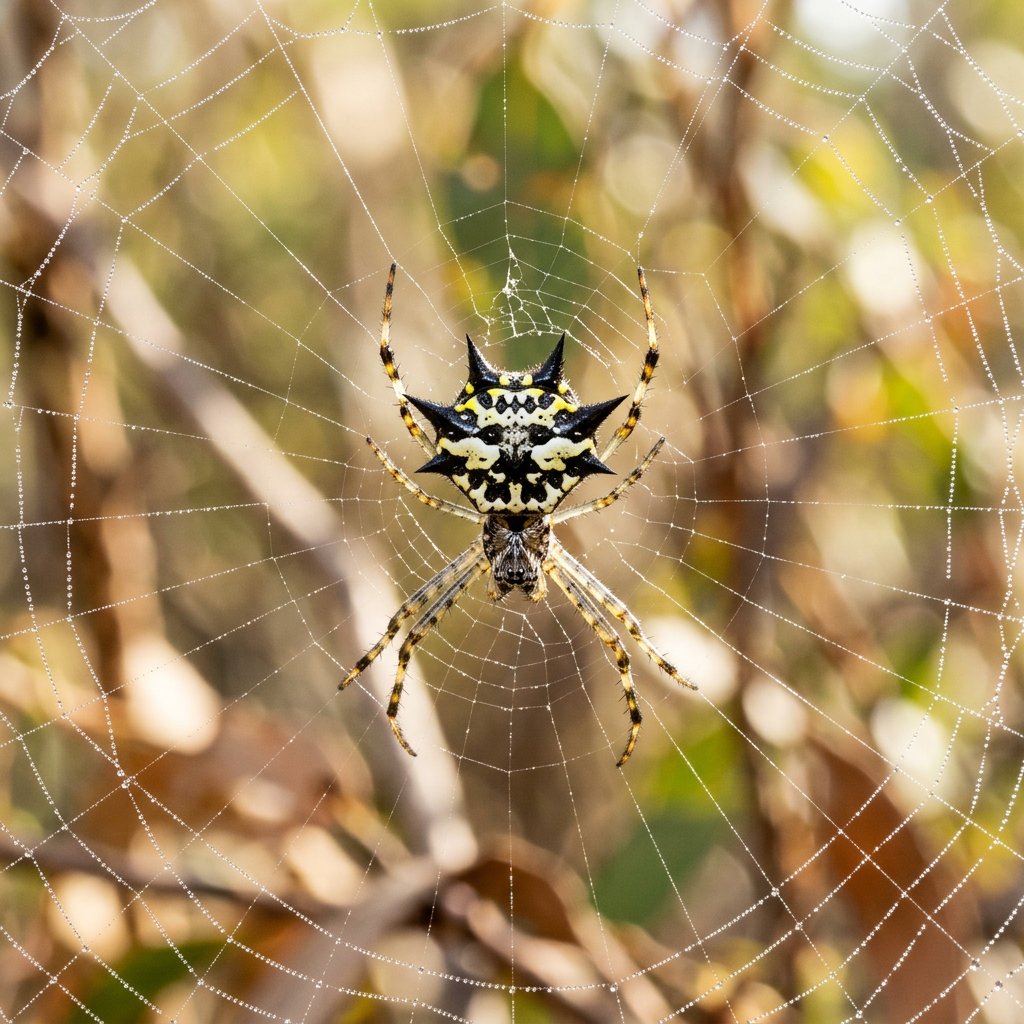
Commonly known as the Australian Jewel Spider or the Christmas Spider, this tiny architect is one of Australia’s most striking garden residents. While its six sharp-looking spines might make it look like a miniature medieval weapon, this spider is a peaceful neighbor that spends its days hanging in shimmering, circular webs. They earned the "Christmas" nickname because they appear in massive numbers across Australia during the mid-summer festive season.
🔍 How to Identify
- 💎 Jewel-Like Abdomen: The most striking feature is its hard, shell-like abdomen, which is usually bright yellow or white with distinct black spots.
- ⚔️ Six Spiny Points: The abdomen is ringed with six prominent, sharp black spines that give the spider its "jewel" or "star" shape.
- 🕷️ Compact Size: Despite their bold appearance, females are only about 10mm-12mm long, while males are significantly smaller and less colorful.
🌲 Habitat & Ecology
- 🕸️ Colonial Webbing: These spiders are social "loners." While each spider has its own web, they often build them right next to each other, creating massive, overlapping silk "cities" that can span several meters across shrubs and trees.
- 🦟 Natural Pest Control: They are excellent "insect-munchers," catching small flying insects like flies, mosquitoes, and gnats in their vertical, orb-shaped webs.
- 🌳 Garden Preference: You’ll most likely find them at eye level in shrubby gardens, woodland areas, or hanging between the branches of Eucalyptus trees.
⚠️ Safety & Toxicity
- 🛡️ Non-Aggressive: The Jewel Spider is a "friend" to gardeners. They are extremely shy and would much rather drop to the ground or retreat than bite a human.
- 🩺 Low Medical Risk: Their venom is considered harmless to humans and pets. In the very rare event of a bite (usually from accidentally pinching one), it may cause local pain or a small itchy bump, similar to a bee sting.
- 🐾 Pet Safety: They are not toxic to dogs or cats. Their hard, spiny shells usually discourage curious pets from trying to eat them!
✨ Fun Fact
Unlike many spiders that hide during the day, the Jewel Spider sits right in the center of its web in the bright sun. They decorate their webs with tiny white "tufts" of silk, which scientists believe act as a warning sign to prevent birds from accidentally flying through and destroying their hard work!
More Details








