Info
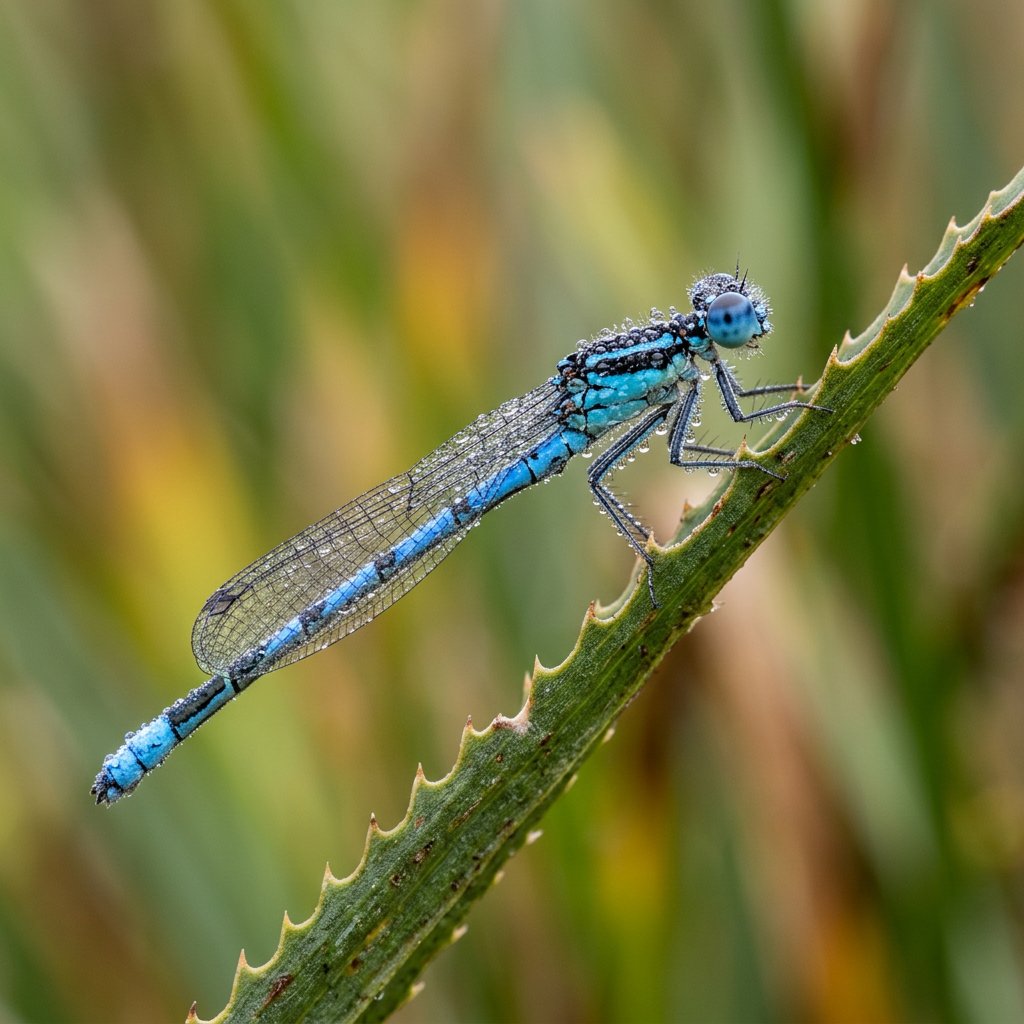
Meet the Blue-spotted Damselfly, New Zealand's largest and most striking damselfly. Often seen shimmering like a living sapphire near the water's edge, this elegant aerial acrobat is a master of the wetlands. In many cultures, these "living jewels" are seen as symbols of change and adaptability, darting through the air with unmatched precision.
🔍 How to Identify
- 💎 Azure Accents: Males are easily recognized by the brilliant, sky-blue spots that decorate their dark, metallic bronze or black bodies, particularly near the tip of the abdomen.
- 📐 Vertical Wings: Unlike dragonflies that rest with wings spread wide, this damselfly holds its four clear, lace-like wings folded neatly together along its back when perched.
- 📏 Sturdy Build: It is significantly larger and more "robust" than its cousins, making it look like a heavyweight among the delicate damselfly world.
🌲 Habitat & Ecology
- 🦟 The Mosquito Hunter: This insect is a major "friend" to humans. It acts as a miniature dragon, patrolling the air to catch gnats, midges, and mosquitoes using its legs like a tiny catching basket.
- 💧 Reed Dweller: They are homebodies of the wetlands. You will find them clinging to reeds, sedges, and tall grasses surrounding stagnant ponds, peat bogs, or slow-moving forest streams.
⚠️ Safety & Toxicity
- ✅ Completely Harmless: Despite their somewhat "pointed" look, damselflies do not have a stinger. They are not venomous and are safe for curious children and pets to observe.
- 🛡️ Gentle Nature: They rarely bite humans, and even if they do (only if handled very roughly), their tiny mandibles are usually too weak to break the skin.
✨ Fun Fact
The female Blue-spotted Damselfly is a secret "scuba diver." When it is time to lay her eggs, she often crawls entirely underwater, wrapped in a thin silver film of air trapped by her wings, to place her eggs safely inside the stems of aquatic plants.
More Details








