Info
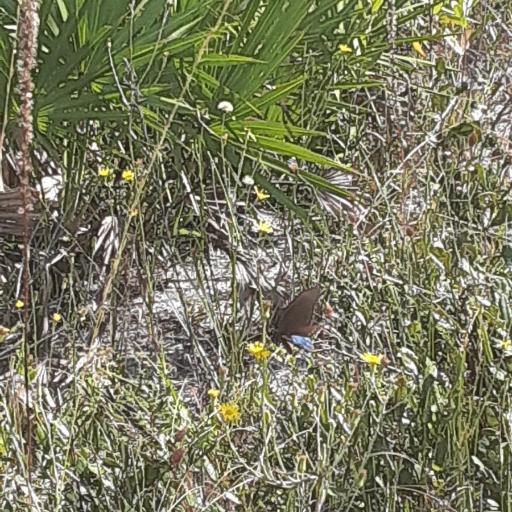
The Pipevine Swallowtail is a show-stopping "friend" of the garden, often seen fluttering through meadows like a piece of shifting dark silk. It is most famous for its stunning iridescent blue hindwings that shimmer brilliantly under the sun. While its dark, spiky caterpillar might look like a tiny, armored alien, this butterfly is a harmless and vital pollinator with a clever chemical secret.
🔍 How to Identify
- 🦋 Iridescent Wings: The upper side of the hindwings features a magnificent, metallic blue-green sheen that contrasts sharply against the velvety black of the forewings.
- 🟠 The "Seven Spots": When the butterfly folds its wings, you will see a distinct row of seven bright orange spots encircled by a shimmering blue field on the underside.
- 🐛 The Larva: The caterpillar is unmistakable—it is typically deep purple or black with rows of soft, fleshy red or orange-tipped "spikes" (tubercles) running along its body.
🌲 Habitat & Ecology
- 🌺 A Specialized Diet: This butterfly is a "specialist." Its larvae feed exclusively on Pipevine plants (Aristolochia). By eating these plants, the caterpillars sequester toxins that stay in their bodies even after they transform into butterflies.
- 🐝 High-Energy Pollinator: Unlike some butterflies that bask for long periods, the Pipevine Swallowtail is a restless flier. It moves rapidly between nectar-rich flowers like thistles, bergamot, and lilac, making it an incredibly efficient pollinator.
⚠️ Safety & Toxicity
- 🛡️ Toxic if Ingested: While these butterflies are completely safe to watch and do not bite or sting, they are chemically defended. They are poisonous to birds and small mammals if eaten.
- 🐾 Pet Watch: Because the caterpillars and adults carry aristolochic acids from their host plant, they can cause vomiting or distress in pets (dogs or cats) if accidentally swallowed.
✨ Fun Fact
The Pipevine Swallowtail is so "famous" for being toxic that other non-poisonous butterflies, such as the Red-Spotted Purple and the female Eastern Tiger Swallowtail, have evolved to mimic its appearance. This evolutionary trick, known as Batesian Mimicry, protects the mimics from being eaten by birds who mistake them for the bitter Pipevine Swallowtail!
More Details








