Info
The Bibio lanigerus, often called the "Woolly March Fly," is one of spring’s most misunderstood visitors. If you see a swarm of dark, fuzzy insects "dancing" clumsily in the air around April or May, you’ve likely found these gentle garden helpers. Despite their somewhat dramatic appearance and dangling legs, they are short-lived messengers of warmer weather.
🔍 How to Identify
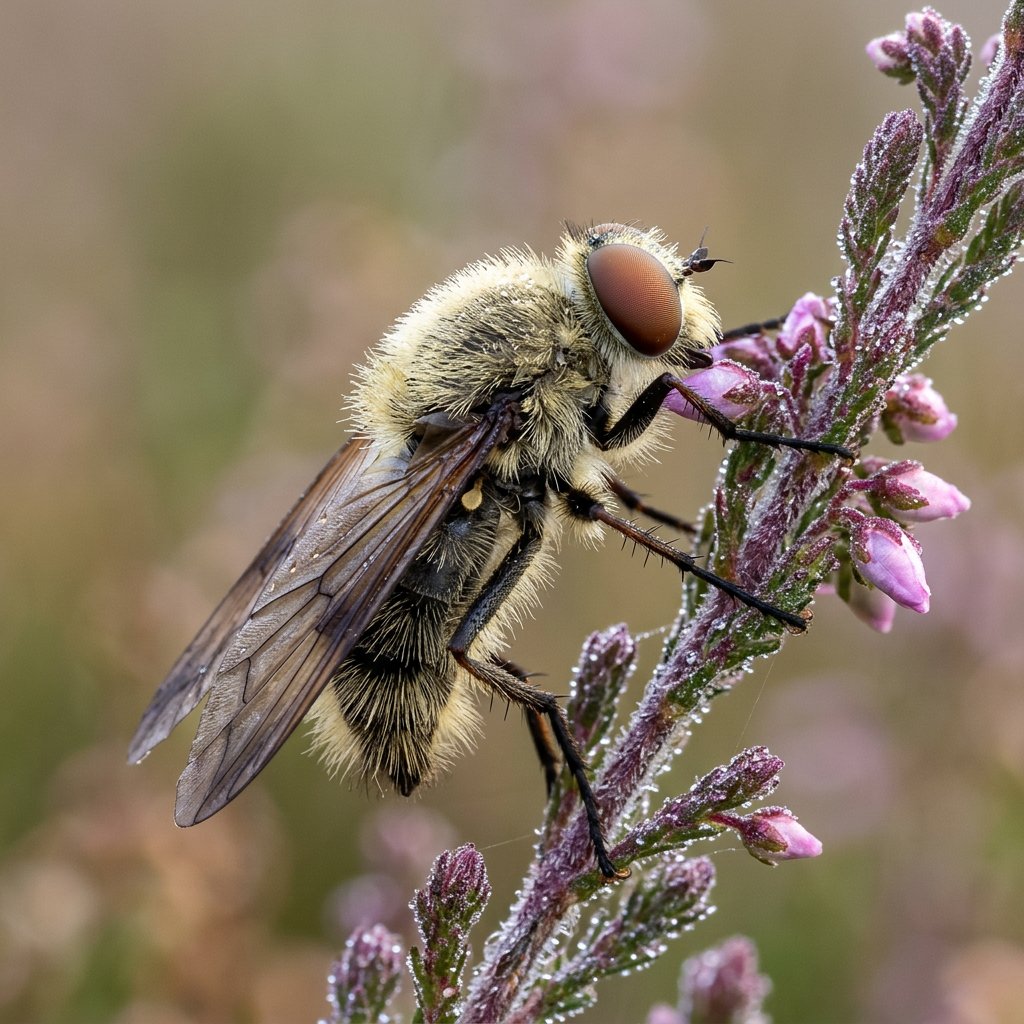
- 🧶 Woolly Coating: True to their name (lanigerus means "wool-bearing"), their black bodies are covered in dense, fine hairs, giving them a velvety look.
- 👁️ Gendered Eyes: You can tell them apart easily; males have massive, wrap-around eyes that meet at the top of the head, while females have much smaller eyes set wide apart.
- 🦵 Dangling Flight: They are famously poor aviators, often flying with their long back legs hanging down as if they are struggling to stay airborne.
🌲 Habitat & Ecology
- 🌸 Pollination Partners: As adults, these flies spend their few weeks of life visiting flowers for nectar. They are excellent secondary pollinators for fruit trees and wildflowers.
- 🍂 Soil Recyclers: In their larval stage, they live underground or in leaf litter. They play a vital role in the ecosystem by breaking down decaying organic matter, turning old leaves into nutrient-rich soil.
- ☀️ Sun Lovers: They are most active on bright, still spring days. You’ll often find them congregating near hedges or over lawns where the soil is moist and full of compost.
⚠️ Safety & Toxicity
- ✅ Status: Completely Harmless. Though they might look like they could bite or sting due to their dark color and swarm behavior, they possess no stinger and their mouthparts are incapable of biting humans or pets.
- 🦟 The "Scare" Factor: They may occasionally fly into your face or land on your clothes because of their clumsy nature, but they are "friendly" giants of the fly world. No pest control is necessary; they disappear as quickly as they arrive.
✨ Fun Fact
The males of this species have eyes divided into two parts: a large upper section for detecting the silhouette of females against the bright sky, and a smaller lower section for navigating their surroundings!
More Details








