Info
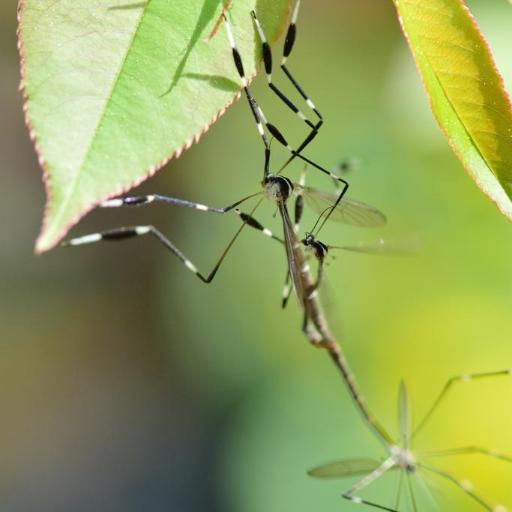
Often called the Phantom Crane Fly, this insect looks more like a floating piece of lint or a tiny ghost than a typical fly. Found drifting through the dappled sunlight of woodland wetlands, its unique black-and-white markings make it appear to vanish and reappear as it moves through shadows. It is widely considered one of the most ethereal and enchanting insects you’ll encounter in the wild.
🔍 How to Identify
- 🦵 The "Puffy" Legs: The most striking feature is the alternating black and white bands on its long, spindly legs. The joints (tarsi) are noticeably swollen or "inflated," looking like tiny black-and-white beads.
- 🕸️ Floating Flight: Unlike the erratic zig-zag of a housefly, the Phantom Crane Fly drifts slowly and steadily through the air, often holding its legs out wide like a star.
- 📏 Slender Build: It has an incredibly thin, elongated body and a single pair of delicate, transparent wings that are often nearly invisible while the insect is in motion.
🌲 Habitat & Ecology
- 💧 Wetland Lovers: You will almost exclusively find them in moist, shaded environments. Look for them in marshes, boggy woods, or near the edges of slow-moving streams where the air is humid.
- 🍂 Nature’s Recyclers: During their larval stage, they live in saturated soil or decaying leaf litter. They act as "detritivores," feeding on decomposing organic matter and helping to cycle nutrients back into the forest floor.
- 🌬️ Wind Riders: They are not powerful flyers. Instead, they use their expanded leg segments to catch even the slightest breeze, allowing them to "sail" through the undergrowth with minimal effort.
⚠️ Safety & Toxicity
- 🛡️ Completely Harmless: Despite their somewhat "spidery" appearance or large size, Phantom Crane Flies do not bite, sting, or carry diseases. They lack any mechanism to harm humans or animals.
- 🐶 Pet & Human Safe: They are incredibly fragile creatures. They pose no threat to curious children or pets, though they should be handled with extreme care (or not at all) because their long legs break off very easily.
✨ Fun Fact
Those swollen segments on their legs aren't just for show—they are actually filled with tiny air sacs! These "puffy" parts act like biological balloons, helping the fly stay buoyant so it can drift effortlessly on the wind like a dandelion seed.
More Details








