Info
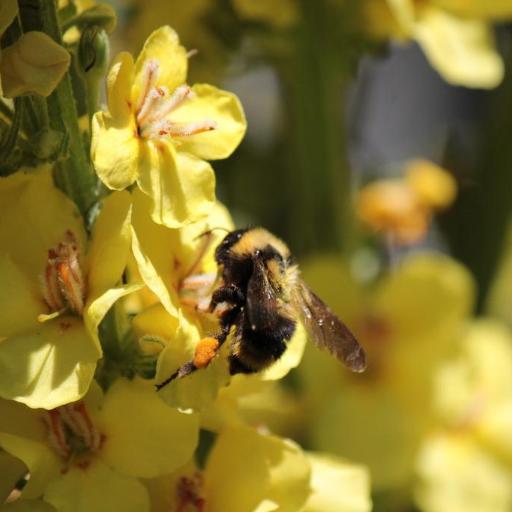
Often called the "Fuzzy Bear of the West Coast," the California Bumble Bee is a hardworking pollinator that acts as a cornerstone for western ecosystems. With its distinct velvety black-and-yellow coat, it is a common sight in backyard gardens and wild chaparral from British Columbia down to Baja. While they might look like tiny, floating tennis balls, these bees are highly sophisticated social insects with a complex family structure.
🔍 How to Identify
- 🐝 The Thorax: Look for a dense coat of yellow hair with a thick, distinct black band or "saddle" running directly between the wing bases.
- 🖤 Abdominal Patterns: Unlike some cousins, the lower half of its abdomen is predominantly black, though the segments closest to the thorax are usually a bright, contrasting yellow.
- 📏 Body Shape: They are robust and "chunky" in shape, covered in fine, branched hairs designed specifically to trap and transport pollen grains.
🌲 Habitat & Ecology
- 🌸 Pollination Specialist: This bee is a master of "buzz pollination," where it vibrates its flight muscles at a specific frequency to shake pollen out of stubborn flowers like tomatoes and blueberries.
- 🏠 Subterranean Homes: These bees are ground-nesters; queens typically seek out abandoned rodent burrows or thick tufts of grass to build their wax-pot colonies during the spring.
⚠️ Safety & Toxicity
- 🛡️ Docile Foragers: On a flower, these bees are incredibly peaceful and will usually ignore humans unless they are swiped at or handled.
- 🩹 The Sting: Only the females possess a stinger. Unlike honeybees, bumble bees have smooth stingers, meaning they can sting multiple times without dying—however, they generally only do this if their nest is stepped on or directly threatened.
✨ Fun Fact
- 👅 Long-Tongued Advantage: Bombus californicus belongs to the "long-tongued" group of bees, allowing it to reach nectar inside deep, tubular flowers that shorter-tongued bees simply cannot access!
More Details








