Info
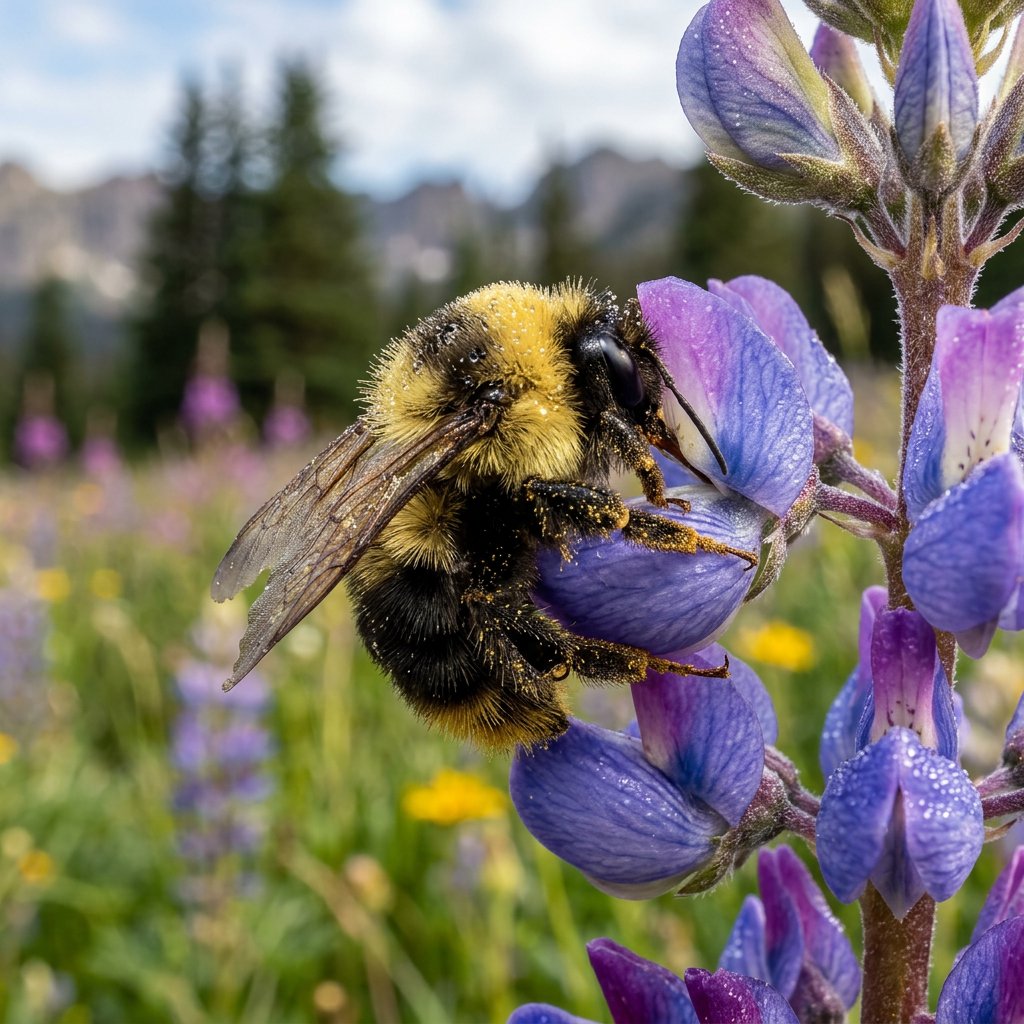
Often referred to as the Central Bumblebee or the Great Basin Bumblebee, this fuzzy aviator is a vibrant icon of the Western North American landscape. With its striking bands of gold and orange, it looks like a flying piece of autumn sunlight. It is a tireless "friend" to gardeners and wild meadows alike, known for its gentle nature and incredible work ethic.
🔍 How to Identify
- 🐝 Golden Bands: Look for a distinctive color pattern: bright yellow on the front of the thorax, followed by a vivid orange or reddish-orange band across the middle of the abdomen.
- ☁️ Velvety Coat: Like most bumblebees, it is covered in dense, soft hairs (setae) that help it collect pollen and regulate its body temperature in chilly mountain air.
- 👅 Long Reach: It has a relatively long tongue compared to other bees, which allows it to specialize in deep, tubular flowers that other insects can't reach.
🌲 Habitat & Ecology
- 🏔️ Mountain Dweller: You’ll most often spot them in high-altitude meadows, sagebrush steppes, and mountain valleys across the Western United States and Canada.
- 🌸 Keystone Pollinator: They are generalists but have a deep love for native wildflowers like penstemons, lupines, and clover. By "buzz-pollinating" (vibrating their flight muscles), they release pollen that other insects simply cannot dislodge.
⚠️ Safety & Toxicity
- 🛡️ Non-Aggressive: This bee is remarkably "chill." It is much more interested in nectar than in you and will typically only sting if physically squeezed or if its nest is directly disturbed.
- 🐾 Pet Interaction: While a sting can cause temporary swelling and pain for a curious dog or cat, they are not aggressive hunters. Keeping your pets away from heavy flowering patches during the day is usually enough to keep everyone safe.
✨ Fun Fact
The Central Bumblebee is a master of "Sonication." They can grab a flower and vibrate their entire body at a specific frequency (roughly a Middle C note) to shake pollen out of the flower’s hidden pores—a technique honeybees haven't quite mastered!
More Details








