Info
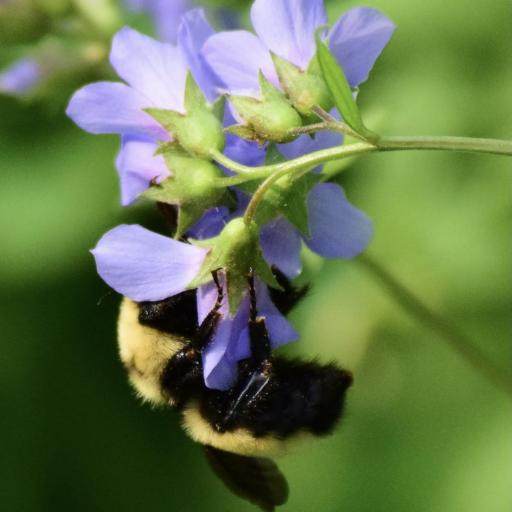
Known as the Golden Northern Bumble Bee, Bombus fervidus is the sun-drenched royalty of the pollinator world. Clad in a dense coat of shimmering yellow fuzz, this bee looks like a flying pom-pom navigating the tall grasses of North American prairies and gardens. While many bumble bees have distinct black segments, the Golden Northern is famous for being almost entirely yellow, making it a bright, cheerful sight for any nature observer.
🔍 How to Identify
- 🐝 Golden Overcoat: Most of the abdomen and thorax are covered in bright yellow hairs, giving it a much more "solid" gold appearance than other species.
- 🖤 The Black Band: Look for a single, distinct black band of hair running across the thorax between the wing bases.
- 📏 Long Face: They possess a notably long head and tongue, a specialized tool designed for reaching deep into tubular flowers that other bees can't access.
🌲 Habitat & Ecology
- 🌸 Specialist Feeder: Because of their long tongues, they are the primary pollinators for deep-throated flowers like Red Clover, Bee Balm, and Vetch. They are essential for the health of wild legumes.
- 🏠 Surface Nests: Unlike many bumble bees that tunnel deep underground, these bees often build their nests on the soil surface or just beneath it, tucked away in thick clumps of grass or abandoned mouse nests.
- 📉 Conservation Status: Once very common, their populations are currently in decline due to habitat loss and pesticide use. Seeing one in your garden is a sign of a healthy, pesticide-free ecosystem!
⚠️ Safety & Toxicity
- 🛡️ Defensive Nature: While generally peaceful while foraging, Bombus fervidus is known to be slightly more "spirited" than other bumble bees when defending their nest.
- 💉 The Sting: Only females (queens and workers) have stings. It is not barbed, meaning they can sting multiple times if they feel the colony is under direct threat.
- 🐾 Pets & Kids: They are not aggressive if left alone. However, because they nest in tall grass, curious dogs or children playing in unmown areas should be mindful of "bumping" into a surface colony.
✨ Fun Fact
The Golden Northern Bumble Bee has a unique way of dealing with "Cuckoo Bees" (parasitic bees that try to take over the nest). Instead of just biting them, the workers will sometimes cover the intruder in sticky honey to immobilize them and escort them out!
More Details








