Info
Known as the Northern Great Bumblebee, Bombus magnus is a majestic, fuzzy giant often found patrolling the rugged heathlands of Northern Europe. Because it looks almost identical to its cousins, the White-tailed and Buff-tailed bumblebees, it is part of what scientists call a "cryptic species complex." To the casual observer, it is a gentle, golden-banded cloud drifting through the mist of a moorland morning.
🔍 How to Identify
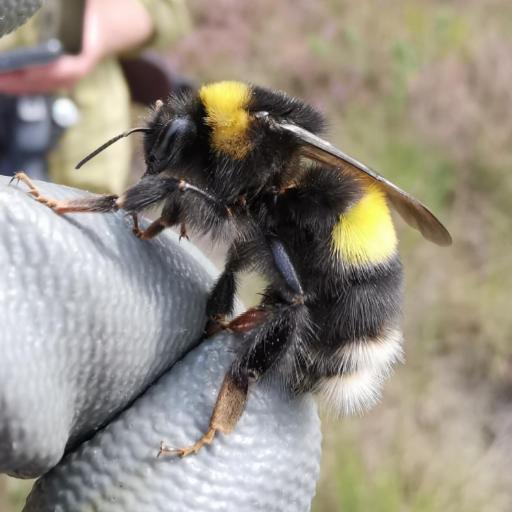
- 🐝 The Lemon Bands: Look for two distinct, bright lemon-yellow bands—one on the thorax (near the head) and one on the abdomen. In B. magnus, the yellow collar often extends further down the sides than in its relatives.
- 🤍 Snowy Tail: The tip of the abdomen is a clean, striking white, which contrasts sharply against its dark black midsection.
- 📏 Stately Size: As the name "Magnus" suggests, the queens are notably large and robust, often appearing bulkier than other common garden bumblebees.
- 👃 Short Face: It has a relatively round head and a short tongue, which influences the types of flowers it chooses to visit.
🌲 Habitat & Ecology
- 🏔️ Upland Specialist: Unlike the common garden bumblebee, this species prefers "wilder" landscapes. You are most likely to spot them in coastal areas, moors, and mountains where Bilberry and Heather are abundant.
- 🌸 The "Nectar Robber": Because of its short tongue, it sometimes can’t reach the nectar in deep tubular flowers. Instead of giving up, it uses its mandibles to bite a hole in the base of the flower to "steal" the nectar without pollinating the bloom.
- 🏠 Subterranean Homes: These bees typically nest underground, often repurposing old rodent burrows or nesting deep within thick mats of moss and grass.
⚠️ Safety & Toxicity
- 🛡️ Gentle Giant: Like most bumblebees, Bombus magnus is incredibly docile. It is not aggressive and will only sting if it is handled roughly or if its nest is stepped on.
- 🐾 Low Risk: It poses very little threat to children or pets. A sting may cause localized swelling or pain, but it is only dangerous to those with a specific allergy to bee venom.
✨ Fun Fact
Because Bombus magnus is so visually similar to the White-tailed Bumblebee (Bombus lucorum), even expert entomologists often cannot tell them apart just by looking. For decades, they were considered the same species until DNA sequencing proved that the Northern Great Bumblebee is a unique lineage!
More Details








