Info
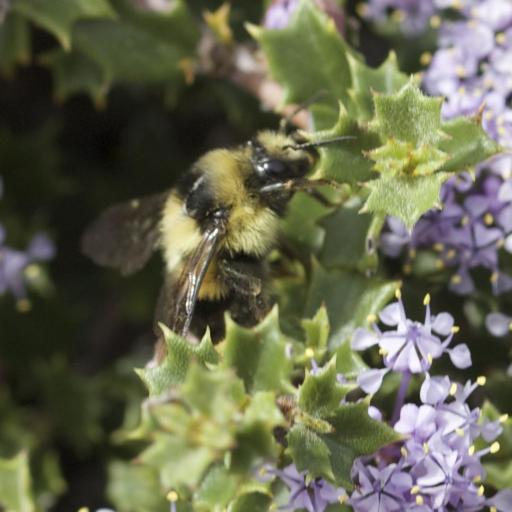
The Black-tailed Bumble Bee (Bombus melanopygus) is often one of the very first signs of life in the late winter or early spring across Western North America. Despite its name, this bee is most famous for its striking "sunset-colored" midsection, making it look like a tiny, fuzzy ember floating through the garden. These are the quintessential "gentle giants" of the insect world, often found shivering their flight muscles to stay warm while other insects are still hibernating.
🔍 How to Identify
- 🐝 The Color Band: Look for a prominent, fuzzy orange or reddish-orange band across the middle of the abdomen. Note that in some northern regions, this band can be black, living up to its common name.
- 🧶 The "Teddy Bear" Texture: Their entire bodies are covered in dense, velvety hair (pile), which helps them forage in temperatures that would freeze other bees.
- 🖤 The Face: They typically have a black face with a splash of yellow hair on the top of the head, giving them a very "masked" appearance.
🌲 Habitat & Ecology
- 🏡 Early Season Hero: Because they emerge so early (sometimes as early as February), they are the primary pollinators for early-blooming native plants like Manzanita, Willow, and Currants.
- 🕳️ Subterranean Suites: Unlike honeybees that live in hives above ground, these bumble bees usually seek out abandoned rodent burrows or thick clumps of dried grass to build their nests.
- 👅 Generalist Feeders: They have medium-length tongues, allowing them to visit a wide variety of flower shapes, making them one of the most versatile pollinators in your backyard.
⚠️ Safety & Toxicity
- 🛡️ Peaceful Neighbors: These bees are exceptionally non-aggressive. They are far more interested in pollen than people and will generally only sting if their nest is stepped on or if they are squeezed.
- 🩹 The Sting: Only females (queens and workers) possess a stinger. Unlike honeybees, they can sting multiple times without dying, though they rarely do so.
- 🐶 Pets and Kids: While the venom is low-risk for most, curious pets who try to "eat" the bee may get a painful sting inside the mouth. Always monitor children playing near ground-nesting sites.
✨ Fun Fact
The Black-tailed Bumble Bee is a master of "Buzz Pollination." They grab onto a flower and vibrate their flight muscles at a specific frequency to shake stubborn pollen loose—a trick that honeybees haven't quite mastered!
More Details








