Info
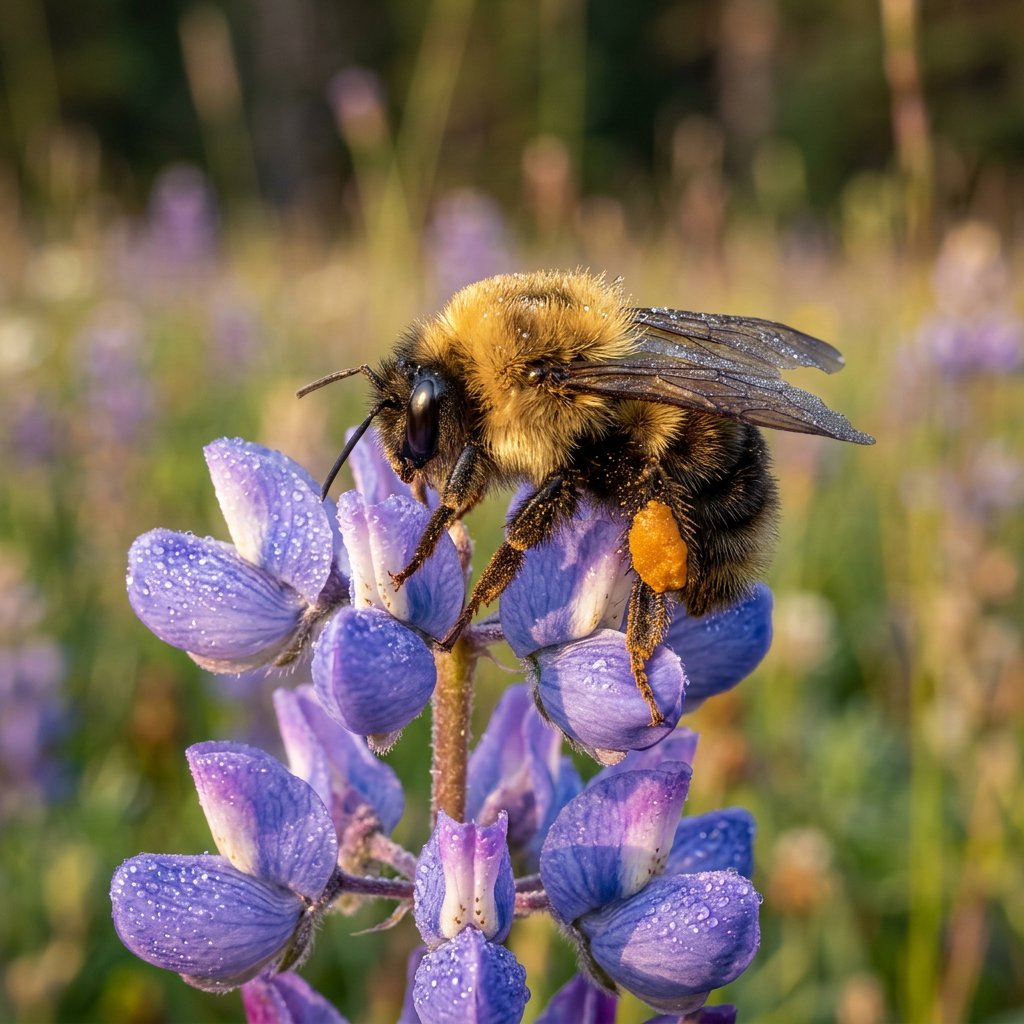
Once the most common bumble bee across Western North America, this fuzzy traveler is now a rare and precious sight in our gardens. Known as the Western Bumble Bee, it is a keystone pollinator that has faced significant population declines, making every sighting a special event for nature lovers. With its distinct "white-bottomed" look, it plays a starring role in the health of our mountain meadows and backyard vegetable patches.
🔍 How to Identify
- 🐝 Abdominal Tip: Look for the tell-tale white or pale-gray "tail" at the very end of its fuzzy body, which distinguishes it from many other local species.
- 🟡 Thoracic Stripe: It usually sports a thick band of bright yellow hair across the top of its thorax (the middle section), right behind the head.
- 🖤 Dark Face: Unlike some of its cousins who have yellow patches on their heads, the Western Bumble Bee typically has a completely black face.
🌲 Habitat & Ecology
- 🌸 Generalist Forager: This bee isn't picky! It visits a huge variety of flowers, from wild lupines and clovers to your backyard tomatoes and peppers.
- ⚡ Buzz Pollination: It is a master of "sonication." By grabbing a flower and vibrating its wing muscles at a specific frequency, it can dislodge stubborn pollen that honeybees simply can't reach.
- 🏡 Ground Dwellers: They typically build their social nests underground, often repurposing abandoned rodent burrows or tucked-away cavities beneath thick grass.
⚠️ Safety & Toxicity
- 🛡️ Docile Nature: Western Bumble Bees are gentle giants. They are not aggressive and will only sting if they feel their life is in immediate danger or if their nest is stepped on.
- 🐾 Pet & Child Safety: They are safe to observe from a few inches away. As with any stinging insect, curious pets should be steered away from active nests to avoid accidental "defensive" stings.
✨ Fun Fact
Scientists believe the dramatic decline of this bee was partly caused by a "spillover" effect—commercial bees used in greenhouses may have accidentally introduced a gut parasite to the wild population, making this once-common bee a species of high conservation concern today.
More Details








