Info
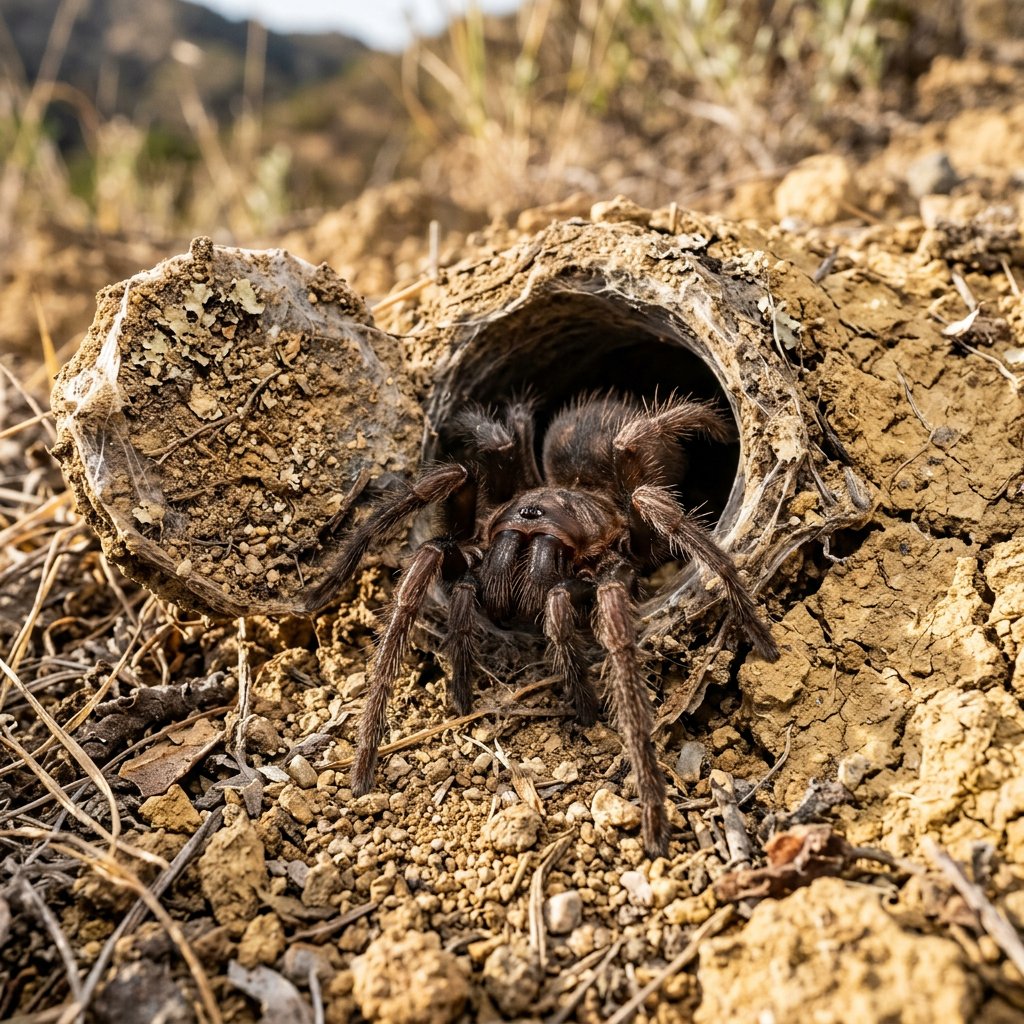
The California Trapdoor Spider is the reclusive master-builder of the underground. Often mistaken for a small tarantula, these sturdy arachnids are famous for their "cork-style" burrows, where they wait in total darkness for the vibrations of a passing meal. They are one of California’s most iconic "hidden" neighbors, spending nearly their entire lives in a single, well-crafted tunnel.
🔍 How to Identify
- 🕷️ Robust Build: They have thick, powerful legs and a heavy, bulbous abdomen. They are significantly more "stocky" than common house spiders.
- 🖤 Glossy Texture: The front half of the body (the cephalothorax) is typically dark brown or black and has a high-shine, polished appearance.
- 🕳️ The Trapdoor: You are most likely to identify them by their home. They create a perfectly circular, silk-lined hole in the ground capped with a camouflaged lid made of soil and vegetation.
🌲 Habitat & Ecology
- 🍂 Suburban Survivors: While they love chaparral and grassy hillsides, they frequently turn up in California gardens and backyards, especially on sloped terrain where water drains well.
- 🌧️ Rainy Season Wanderlust: You will rarely see a female, as they stay underground. However, during the first heavy rains of autumn, the leggy males emerge and wander across lawns and patios in search of a mate.
- 🐜 Ambush Predators: They are the "ninjas" of the garden. They sit just below their door, holding it slightly ajar with their claws, waiting to spring out and grab ants, beetles, or crickets.
⚠️ Safety & Toxicity
- 🦷 Non-Aggressive: These spiders are extremely shy and would much rather hide in their holes than fight. They only bite if they are pinned or handled roughly.
- 🩹 The Bite: While their large fangs can deliver a painful mechanical pinch, their venom is not considered medically significant to humans. It is roughly equivalent to a bee sting in terms of discomfort.
- 🐾 Pet Watch: They are not a major threat to pets, but the large fangs can cause localized swelling. It’s best to keep curious dogs from digging up their burrows.
✨ Fun Fact
California Trapdoor Spiders are incredibly long-lived! While most garden insects live for a year or less, a female trapdoor spider can live in the same exact burrow for over 20 years, provided her habitat remains undisturbed.
More Details








