Info
Despite sometimes being confused with land-dwelling critters, Busycotypus canaliculatus is actually the Channeled Whelk, a massive and majestic species of sea snail. A true icon of the North American Atlantic coast, this "architect of the tide" is famous for its large, heavy shell and its historical role in making traditional beadwork.
🔍 How to Identify
- 🐚 Deep Channels: The most defining feature is the deep, square-cut groove (the "channel") that follows the spiral of the shell at the seams (sutures).
- 🌀 Pear-Shaped Shell: The shell is robust and elongated, ending in a long, straight "siphonal canal" that looks like a sturdy spout.
- 🎨 Fuzzy Exterior: While beach-worn shells are smooth and tan, living specimens are often covered in a thin, hairy, grey-to-brown protective layer called the periostracum.
🌊 Habitat & Ecology
- 🦀 The Silent Predator: Don't let its slow pace fool you; this whelk is a carnivore. It uses the edge of its own shell to wedge open or chip away at the shells of clams and oysters.
- 🏖️ Shallow Waters: It prefers the sandy or muddy bottoms of shallow coastal bays and estuaries, ranging from Massachusetts down to Northern Florida.
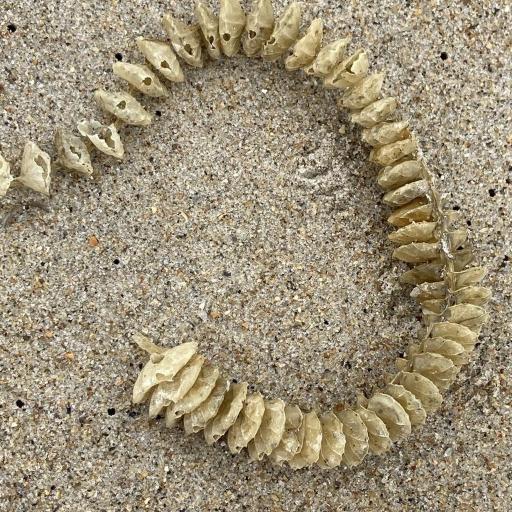
- 🧶 Egg String "Mermaid Purses": You may find their egg cases on the beach—long, parchment-like strings of discs that look like a giant beige necklace.
⚠️ Safety & Toxicity
- ✅ Safe to Handle: The Channeled Whelk is non-toxic and poses no threat to humans. The empty shells are a favorite find for collectors and home decorators.
- 🐚 Sharp Edges: Be cautious when walking barefoot near broken shells, as the thick, calcified fragments can be extremely sharp and may cause deep cuts to feet or paws.
- 🐕 Pet Safety: While the snail itself isn't poisonous, dogs should be discouraged from chewing on the shells, as the shards can cause internal injury if swallowed.
✨ Fun Fact
Native American tribes, such as the Wampanoag, used the central column (columella) of the Channeled Whelk shell to create the white beads for Wampum. These beads were meticulously crafted and used for storytelling, ceremonial gifts, and as a medium of exchange.
More Details








