Info
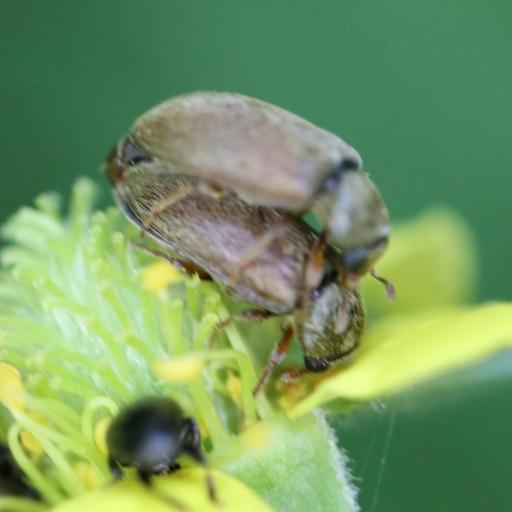
Known to every soft-fruit lover as the uninvited guest at the summer harvest, the Raspberry Beetle (Byturus tomentosus) is a tiny but persistent visitor. While the adults look like harmless, fuzzy brown dots, their offspring are the real "worms" often found hiding inside your favorite garden berries. They are the primary reason many gardeners check their raspberries twice before taking a bite!
🔍 How to Identify
- 🪲 Velvety Armor: The adults are small (about 4mm) and covered in fine, golden-brown or greyish hairs that give them a distinctively fuzzy, matte appearance.
- 🎨 Tawny Tones: They are typically a yellowish-brown color, though they can darken to a deeper chocolate brown as they age throughout the season.
- 🐛 The Larval Form: The larvae are creamy-white, cylindrical "grubs" with brown bands across their backs and a dark brown head, usually found nestled near the core of a ripening berry.
🌲 Habitat & Ecology
- 🍓 Berry Specialist: These beetles are evolutionary experts at finding the Rubus genus. You will almost exclusively find them on raspberries, blackberries, and loganberries.
- 🕒 Spring Emergence: Adults emerge from the soil in late spring (around May) just as the flower buds begin to form. They feed on the young leaves and petals before the female lays her eggs inside the opening blossoms.
- 🍂 Life Cycle: Once the larvae finish eating the fruit, they drop to the ground and burrow into the soil to pupate, waiting until the following spring to repeat the cycle.
⚠️ Safety & Toxicity
- ✅ Harmless to Humans: The Raspberry Beetle is entirely non-toxic. It does not bite, sting, or carry any diseases that affect humans or household pets.
- 🍴 Culinary Nuisance: While accidentally eating a larva won't hurt you, it is considered a "quality pest." They can cause fruit to ripen prematurely, rot, or simply be unappetizing to find in your morning bowl of cereal.
✨ Fun Fact
✨ Scent Detectives: Raspberry Beetles are highly sensitive to the specific floral scents of the raspberry plant. Organic farmers often use "white sticky traps" because the beetles are visually attracted to the color of the flowers, combined with lures that mimic the smell of a blooming berry patch!
More Details








