Info
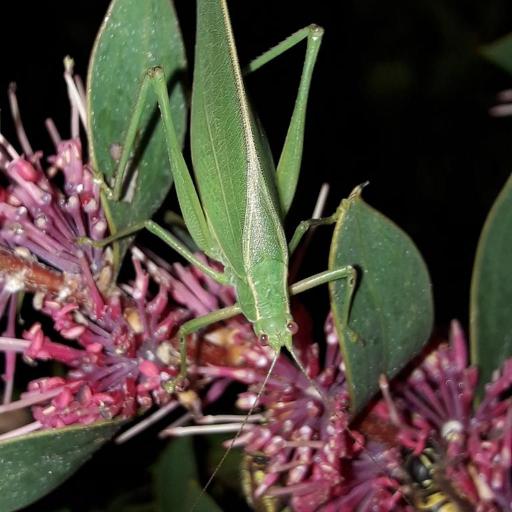
Often hiding in plain sight, the Caedicia simplex—commonly known as the Common Garden Katydid—is a master of disguise. While its vibrant green hue might make it stand out against a white wall, it becomes virtually invisible once it settles onto a shrub or tree. These gentle insects are the quiet musicians of the night, contributing to the rhythmic "tic-tic" pulse of the garden long after the sun goes down.
🔍 How to Identify
- 🍃 Leaf Mimicry: Their forewings are shaped and colored exactly like a fresh green leaf, complete with intricate "vein" patterns designed to fool hungry birds.
- 📡 Elongated Antennae: Unlike their grasshopper cousins, these katydids have incredibly thin, hair-like antennae that are often much longer than their entire body.
- 🦵 Spindly Limbs: They possess long, delicate legs. While the back legs are built for jumping, they usually move with a slow, swaying gait to mimic a leaf blowing in the wind.
🌲 Habitat & Ecology
- 🍽️ Dietary Habits: They are primarily herbivores, nibbling on the tender leaves, flowers, and young shoots of various garden plants. While they may take a bite out of your roses or citrus leaves, they are rarely numerous enough to cause serious damage.
- 🌙 Nocturnal Life: During the day, they remain perfectly still on the undersides of leaves. At night, males use their wings to create high-pitched clicking sounds to attract females, a process known as stridulation.
⚠️ Safety & Toxicity
- ✅ Gentle Guest: The Common Garden Katydid is completely non-venomous and does not have a stinger. They are safe to observe and are a sign of a healthy garden ecosystem.
- 👄 Tiny Nips: They are very docile, but like any insect with mouthparts, they may give a tiny, harmless pinch if handled very roughly. They pose no threat to curious pets or children.
✨ Fun Fact
- 👂 Knee-High Hearing: These katydids don’t hear with ears on their heads! Their hearing organs, called tympana, are actually located on their front legs, just below the "knee" joint, allowing them to detect the direction of a sound by moving their legs.
More Details








