Info
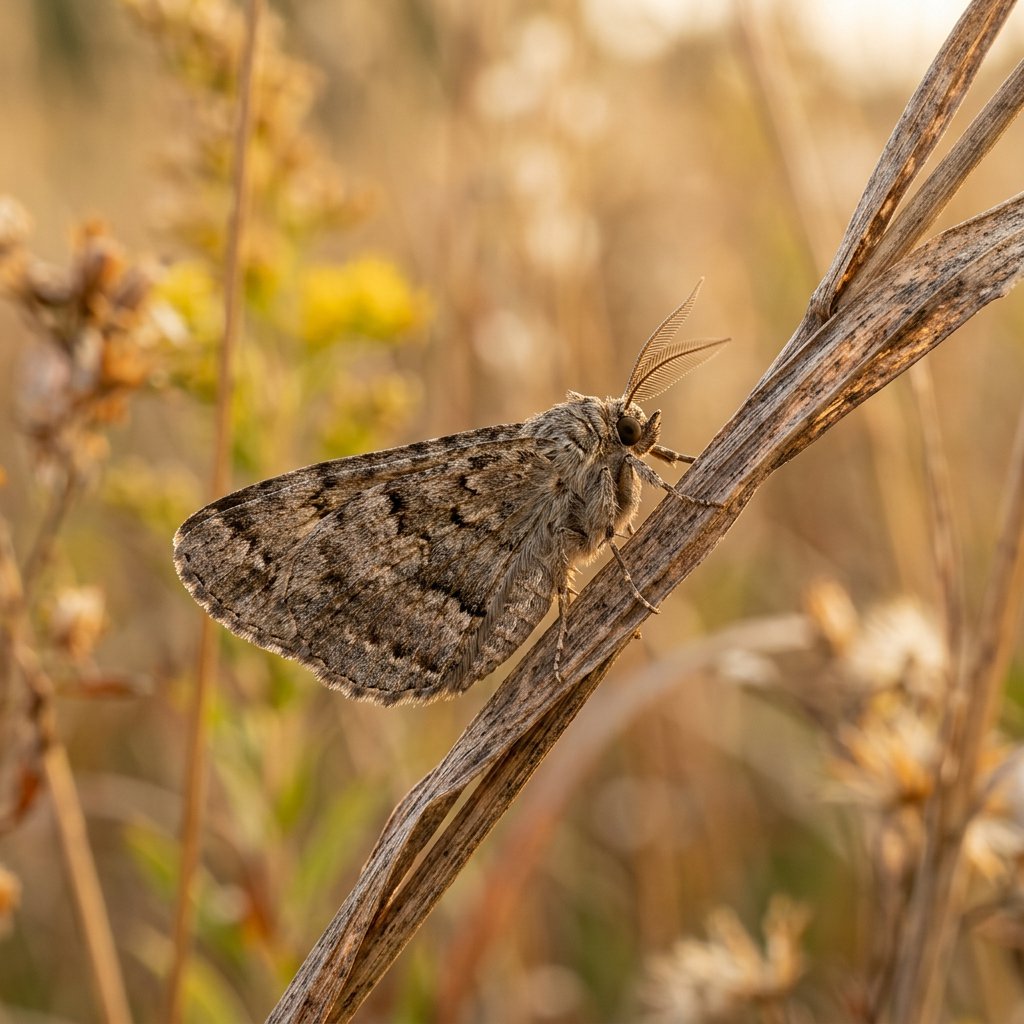
Often called the Forage Looper Moth, Caenurgina erechtea is a master of disguise hiding in plain sight. While many moths are strictly creatures of the night, this resilient flyer is frequently spotted darting through meadows and gardens during the day. Its subtle, earthy tones allow it to vanish against dried leaves or soil the moment it lands.
🔍 How to Identify
- 🦋 Wing Pattern: The forewings are typically light brown or gray, marked by two distinct dark, straight bands. In males, these bands are very prominent, while in females, they are often faint or blurred.
- 📐 Resting Posture: When at rest, they hold their wings out to the sides in a flat, triangular shape, mimicking a fallen leaf or a piece of bark.
- 🐛 The "Loop": As larvae (caterpillars), they lack middle legs, forcing them to arch their backs into a high "loop" to move forward—this is where the name "Looper" comes from.
🌲 Habitat & Ecology
- ☘️ Legume Lover: These insects are a common sight in clover fields, alfalfa patches, and grassy meadows. The caterpillars rely heavily on these plants for food, making them a staple of agricultural landscapes.
- 🌞 Double Life: Unlike most moths, the Forage Looper is "dying to be active." They are crepuscular, meaning they are active at dawn and dusk, but they are easily flushed out of the grass during a sunny afternoon walk.
- 🌼 Pollination Partner: As adults, they visit a variety of wildflowers to drink nectar, playing a minor but helpful role in the pollination of meadow flowers.
⚠️ Safety & Toxicity
- ✅ Harmless: This moth is a complete "friend" to humans. It does not possess a stinger, it does not bite, and it does not produce any irritating chemicals.
- 🐾 Pet Friendly: They are non-toxic to curious cats or dogs who might try to catch them in the backyard. They are a natural part of the food chain for local birds and bats.
✨ Fun Fact
The Forage Looper is often mistaken for a butterfly because of its daylight flight patterns. However, you can tell it’s a moth by its feathery or thread-like antennae—butterflies have distinct "clubs" at the tips of theirs!
More Details








