Info
The Owl Butterfly (Caligo) is a master of disguise and a giant of the tropical rainforests. Known for the incredible, haunting "eyes" on its wings, this butterfly is a favorite in conservatories and a mystical sight in the wild. Unlike many of its bright, sun-loving cousins, this gentle giant prefers the shadows and the sweet scent of overripe fruit over flower nectar.
🔍 How to Identify
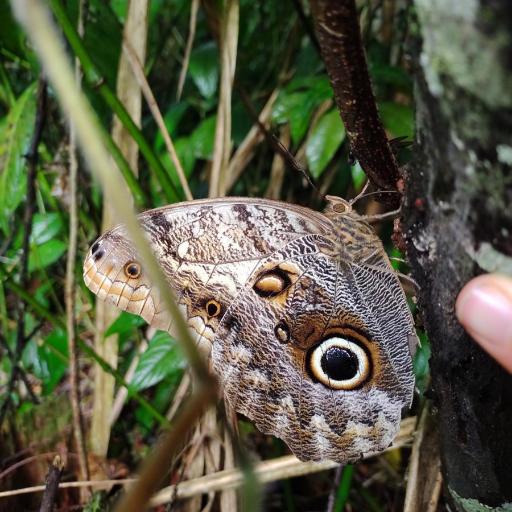
- 🦉 The "Owl Eyes": The most striking feature is on the underside of the hindwings, where two large, circular spots rimmed in yellow and black perfectly mimic the eyes of a predator like an owl or a forest frog.
- 🦋 Velvety Upper Wings: When the wings open, they reveal a more subtle palette of dusty blues, deep purples, and earthy browns, often with a slight iridescent sheen that shifts in the light.
- 📏 Gigantic Proportions: These are some of the largest butterflies in the world. Their wingspans can reach up to 8 inches (20 cm), making their flight appear heavy and moth-like.
🌲 Habitat & Ecology
- 🍎 A Sweet Tooth: You won't often find these on flowers. Instead, Caligo adults are attracted to the fermenting juices of rotting fruit like bananas, mangoes, and pineapples.
- 🌇 Twilight Dwellers: They are crepuscular, meaning they are most active during the dim light of dawn and dusk. This behavior helps them avoid many daytime birds that would otherwise find them a tasty snack.
- 🍌 The Banana Connection: Their caterpillars are massive, leaf-eating machines that primarily feed on banana and Heliconia plants. Because of this, they are sometimes known as "Banana Butterflies."
⚠️ Safety & Toxicity
- 🤝 Status: Completely harmless. They are "friends" of the garden and the forest, acting as a food source for larger animals and helping decompose fallen fruit.
- 🍃 Handle with Care: They do not bite or sting. However, like all butterflies, their wings are covered in delicate microscopic scales. Touching them can damage their flight capability and protective camouflage, so it is best to observe them without handling.
✨ Fun Fact
When viewed from the side, the wing's edge and the "eye" spot together can mimic the head of a vine snake. This "double mimicry" ensures that if a bird isn't scared by the "owl," it might still be terrified by the "snake!"
More Details








