Info
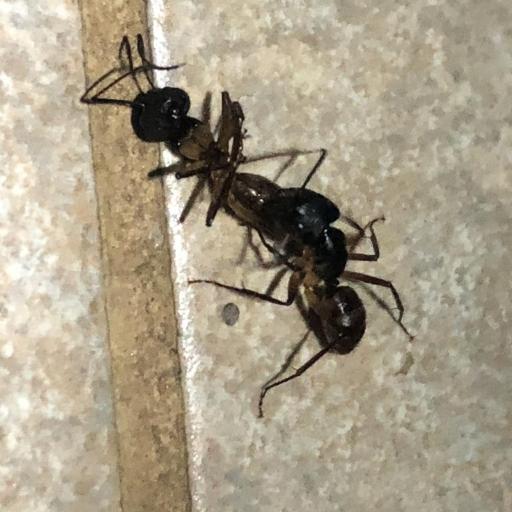
Often called the Black-headed Carpenter Ant, Camponotus atriceps is a nocturnal architect of the insect world. These striking, bicolored ants are famous for their impressive size and their ability to carve complex galleries inside wood. While they don't eat wood like termites do, their presence often signals that nature’s recycling process is in full swing.
🔍 How to Identify
- 🎨 Color Palette: They typically sport a vibrant yellowish-orange or rusty-red body contrasted sharply by a dark brown or jet-black head.
- 📏 Size Variation: They are polymorphic, meaning workers come in many sizes; some "Major" workers can grow quite large with intimidatingly broad heads.
- 🏹 Body Shape: Like all carpenter ants, they have a single, upright node (petiole) between their thorax and abdomen, and a perfectly symmetrical, smoothly arched back when viewed from the side.
🌲 Habitat & Ecology
- 🌙 Night Owls: These ants are primarily nocturnal. You are most likely to see them patrolling your garden or porch under the glow of a flashlight as they forage for sweets and proteins.
- 🏗️ Master Excavators: They prefer to nest in soft, damp, or decaying wood. In the wild, they turn fallen logs into bustling cities, but in urban areas, they may move into moisture-damaged fence posts or porch railings.
- 🍯 Aphid Farmers: They have a "sweet tooth" and often form mutualistic relationships with aphids, "milking" them for sugary honeydew in exchange for protection from predators.
⚠️ Safety & Toxicity
- 🛡️ Defensive Bite: These ants do not have a stinger. However, they possess powerful mandibles and will bite if they feel the colony is threatened.
- 🧪 Chemical Defense: After biting, they may spray a small amount of formic acid into the pinch. While not dangerous to humans or pets, it can cause a sharp, temporary stinging sensation.
- 🏠 Structural Note: While they aren't as destructive as termites, a large colony inside a home can cause minor cosmetic or structural damage over time if moisture issues aren't addressed.
✨ Fun Fact
Carpenter ants like Camponotus atriceps practice something called "Trophallaxis." They have two stomachs—one for themselves and a "social stomach" used to store liquid food that they regurgitate to share with other members of the colony, essentially acting as a living vending machine for their sisters!
More Details








