Info
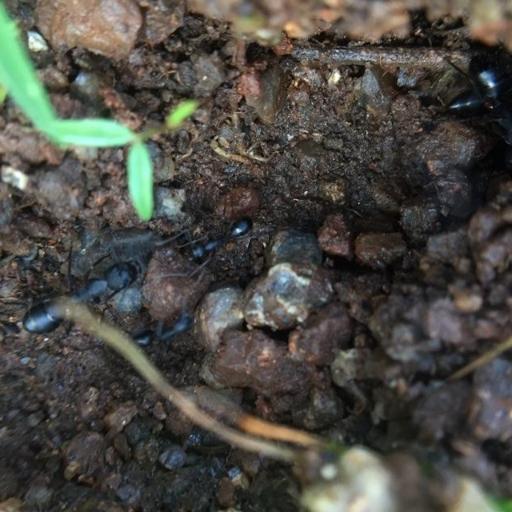
Often called the Greater Black Carpenter Ant, this robust insect is a frequent visitor to gardens and porches throughout South Asia and beyond. While their large size and midnight-black armor might seem intimidating, they are the diligent "janitors" and "ranchers" of the insect world. They play a crucial role in the ecosystem by recycling nutrients and managing other small insect populations.
🔍 How to Identify
- 🐜 Glossy Black Armor: The entire body is a deep, polished black with a noticeable sheen, often reflecting light like a piece of obsidian.
- 📏 Size Diversity: They are "polymorphic," meaning you will see tiny workers alongside much larger "major" workers with massive, heart-shaped heads within the same colony.
- 📐 Structured Waist: Look for a single, distinct upward-pointing node (the petiole) located between their midsection and the rounded abdomen.
🌲 Habitat & Ecology
- 🪵 The Wood-Carvers: Contrary to popular belief, these ants do not eat wood! Instead, they use their powerful jaws to excavate galleries in decaying logs or damp wooden structures to create safe nesting sites for their queen.
- 🥤 Aphid Ranchers: They have a fascinating "farming" lifestyle. They protect aphids from predators like ladybugs in exchange for "honeydew," a sugary liquid the aphids secrete. You will often see them patrolling plant stems to guard their "livestock."
⚠️ Safety & Toxicity
- 👄 The Pinch, Not a Sting: These ants do not have a stinger. However, they are highly defensive of their nest. If provoked, they can deliver a sharp pinch with their mandibles and may spray a tiny drop of formic acid into the bite to make it sting.
- 🐾 General Safety: They are not dangerous to humans or pets. While a bite can be a momentary surprise, they have no venom and do not transmit diseases. They prefer to run away rather than fight unless cornered.
✨ Fun Fact
- 🎓 Tandem Running: These ants are excellent teachers! When a scout finds a new food source, she leads a recruit to the location using "tandem running," where the follower stays in constant physical contact with the leader’s abdomen to learn the route.
More Details








